

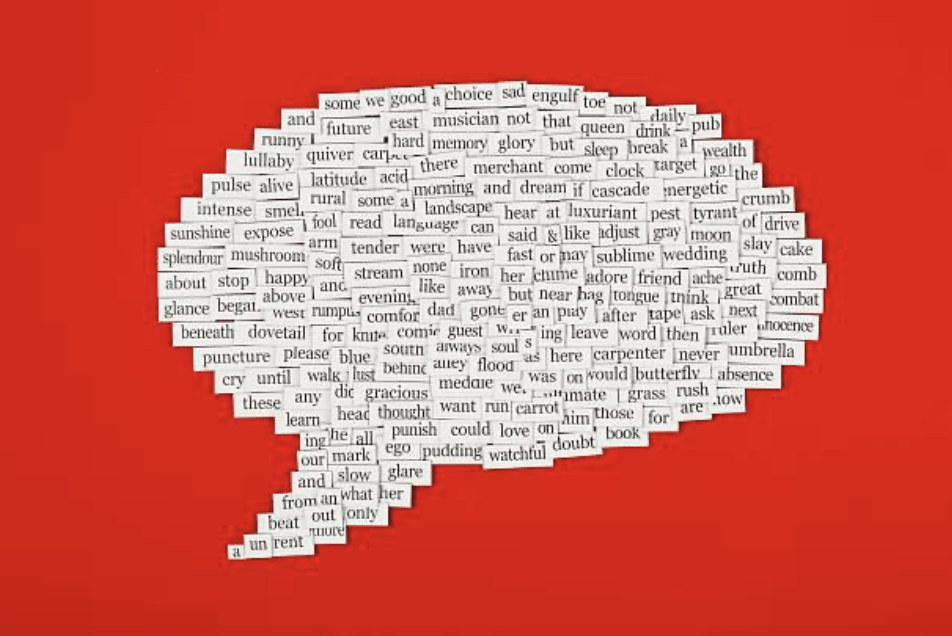
There is a quote from Buddhist thought that says, “Words have the power to both destroy and heal. When words are both true and kind, they can change our world.” Words are the means we use to communicate. We learn words early on in life to get the attention of someone (Mama!), make a request (More, please.) or express emotion (No!). The Free Dictionary defines words as “A sound or a combination of sounds, or its representation in writing or printing, that symbolizes and communicates a meaning.” Unfortunately, there has been a loss of nuance and courtesy in how we use words and address each other. The National Today website noted that On April 22, 2016, the Associated Press – NORC Center for Public Affairs Research at the University of Chicago stated that 74% of Americans believe manners and behavior have declined in the U.S.
Some justify their words by saying, “I’m just being honest… or I tell it like it is.” Maybe so but humiliating someone to make a point is cruel. One can win an argument without dishonoring another. Unfortunately, the rise in social media extremist opinions has caused people to communicate in abrupt, demeaning, and harmful ways. Words are not used to be clear or precise but have become threatening and defamatory. Thus, it is important to take the time to develop a broad vocabulary and learn how to use words well. When we do that, we become more effective in our conversations and can better make our way in the world.
Think of a time when you wanted to talk with someone about something important to you. What did you say? How did you say it? Were you sincere or sarcastic? Did you choose your words carefully? Did you listen to the words of the other person to understand their point of view before stating your case? All too often, what could become a dialogue often turns into a debate. The objective becomes winning through a verbal onslaught that assaults the ears and the heart of the listener. When that happens, you may win the argument but lose the trust of a friend or colleague. This is especially devastating when done in public spaces or on social media. An honest conversation requires give and take that can produce new ideas and realizations instead of aggressive assertions of opinion. It requires conviction in standing up for your point of view and humility to see that the opinions and experiences of others may be valid too. How can we live and work together despite our difference of opinion?
My work as a hospital chaplain and an ordained minister relies on how well I use words. Often, I am called upon to offer a prayer or console grieving patients and their family members. Hospital administration has asked me to do the same when there is a death or a crisis among our employees. Sometimes, I give a pep talk through a text broadcast or make a presentation to other service lines in the hospital. I may be invited to preach or speak at an event at my church. Because of my occupation, I have worked hard to learn the vocabulary of theology and religion. And, I have adapted to the nomenclature of the medical field so I can more effectively engage the hospital staff with my communications. This facility with words required much study and preparation in the classroom and in ministry settings like churches, schools, hospitals, nursing homes and correctional facilities (to name a few). While there are many scriptures in the bible and other holy books about how we use words, one scripture comes to mind for me as a chaplain and a spiritual writer. There is a passage from the prophet Isaiah 50:4 (NIV) where the writer expresses his responsibility to others by how he prepares to speak to them. He says, “The Sovereign Lord has given me a well-instructed tongue, to know the word that sustains the weary. He wakens me morning by morning, wakens my ear to listen like one being instructed.” In other words, the writer owns his responsibility to care for the sad and the vulnerable in an appropriate and ethical manner. He also commits to being a listening presence to his people and his God as he gives attention to the distress or discoveries in his encounters. Like the writer, I want to commit to a discipline of study, spiritual reflection and self-discipline. We would all do well to think more about our words and their impact on others. Before speaking, ask yourself, Am I being clear? Can the other person understand me? What am I trying to convey?
We should also think about how the people around us communicate. Did that person really mean to be abrupt, and if so, did that accomplish anything? Should I take this person’s words literally or do they use expressions for effect? What joy, pain, frustration or sorrow is conveyed in the way each friend and acquaintance speaks? Is an attack really meant to hurt, or is it just a poor way to deflect attention from the real issue? As we learn the power of our language, we can learn to use it to heal.
There are dozens of scriptures in the bible and other holy books that admonish us to exercise caution in what we say and how we say it. Sometimes, we need to make an assertion or state a need. Can we do so in a way that is respectful and clear? Let us aim to make our words a means for developing cooperative relationships so we can live in harmony with each other. If we want to change the word for the better, let us “speak words that are both true and kind.”


Beautifully said!