


We’re pleased to introduce Roger Chiocchi, Stratford local and author of self-published book The Brushy Ridge Militia, a novel about the lives involved and affected by a tragic school shooting, and the measures these victims will go to enact real change at the federal level. We had the pleasure of speaking with him before his appearance at the Stratford Library, and invite you to read this great conversation.
Spoilers ahead!
P: You’ve been expressing yourself creatively since you were a teenager. What draws you to the written word?
R: Well, it’s less the written word and more storytelling. But you have to have an appreciation of the written word to tell a story. I used to write and make films in high school, in the olden days when you had to glue ‘em together, so I was always interested in telling stories. I ended up, for a lot of reasons, going to business school after undergrad, and that got me off track for a while. Later I was an MBA and got into the ad business for the creativity. After about five or six years, I just felt a desire to be creative again. My first venture back into writing was a screenplay, and then I found I liked writing books too.
P: How long did it take you to write The Brushy Ridge Militia?
R: The first draft took about a year and a half. I had an agent who was interested, but for two years she consistently asked for revisions. I finally got to a point where I didn’t like the revisions, so I went back to the original and self-published. I was flattered that she was very interested, but at a certain point I said, ‘enough is enough.’
P: I mean, it’s an interesting concept. I can see why she was attracted to it.
R: Well, that’s good. Thank you. Did you finish it?
P: I did, it’s actually right here.
R: Oh, great.
P: Yeah. So you said the first draft and revisions took about two years. I’m curious which scenes or characters came first. I find that when writing, there’s usually a moment or a person that the rest of a story sort of builds itself around.
R: I think the first character, who ends up being pretty minor, is the school shooter, Austin McGirk. You know, I always get very upset when I hear about a school shooting. What the shooter did is always terrible, right? But sometimes there are things that happen before that, like him being bullied mercilessly in school. And, you know, to me, the bully is somewhat responsible, too. A reviewer picked up on how I didn’t want to condone what [McGirk] did, but I wanted readers to understand why he was pushed to that limit. Who wants to go school the day after you’ve been tormented? Especially when everyone can see what happened on social media? So, he was the first character I came up with because I had to write the whole school shooting scene, which wasn’t easy. But something needed to set off the Brushy Ridge militia.
P: Right. I imagine you had to do a lot of research to write this. Was the choice to set a decent portion of this book in Ohio because of the gun laws they have?
R: Yeah, sort of. When I started the book, I had just visited my son-in-law’s parents for the first time, and they live in a suburban town in Ohio. I’m from New Jersey and used to set everything I wrote there but I wanted to set this somewhere else, so when I did the research, I found Ohio has what’s called the Gun Show and Private Seller loophole. Buyers don’t need to pass a background check, all you have to do is prove you’re 18.
P: I see. You briefly spoke on this already, but was the school shooting the most difficult part of crafting this story?
R: Yeah, but there were some other difficult parts, like the Supreme Court case. I had to do a lot of research to write that. I worked with an attorney who has experience working with screenwriters and authors when they have a courtroom scene. She drilled me on that and made sure I didn’t make a fool of myself.
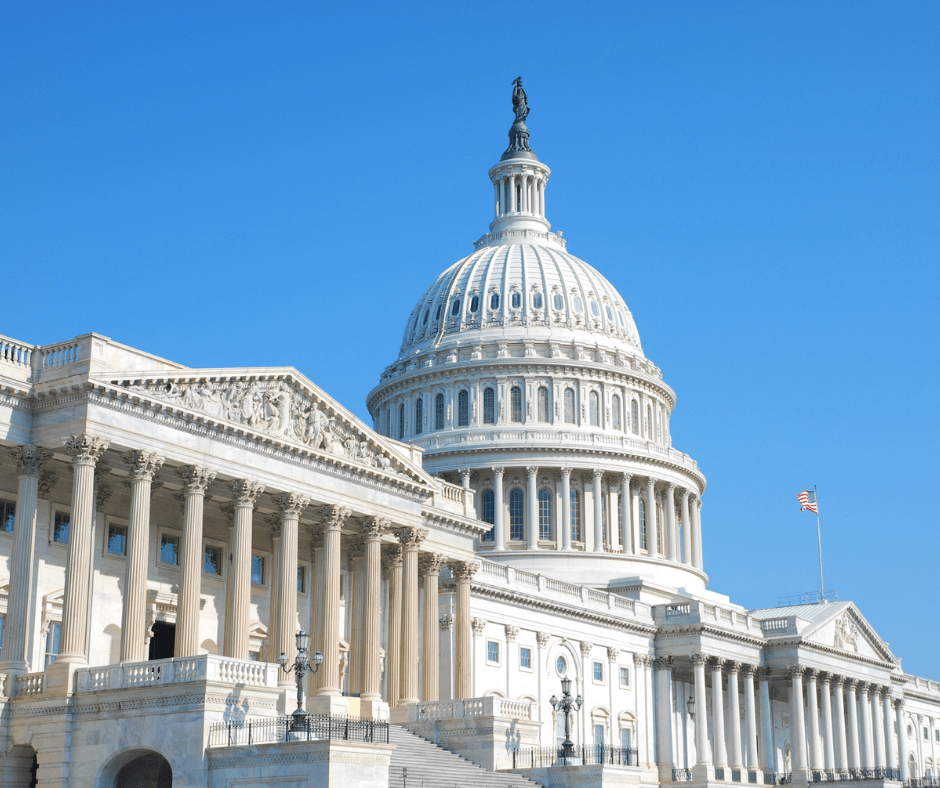
But there were also the parents and them wanting to form a militia and kidnap the Speaker of the House to make him see the devastation he’s allowing to happen. I had to figure out how they would snatch him, what they would do, where they would go.
But, yes, the big emotional challenge was the shooting and the court case, finding that balance between emotions and the law. I am happy with those scenes, but it took a long time.
P: Absolutely. In that same vein, what are you proud of being able to accomplish within this story?
R: Conveying an understanding of the Second Amendment, and that it isn’t what people think it is. Raising an awareness on the entire thing, not just the second half, ‘the right of the people to keep and bear arms shall not be infringed.’ Hopefully there will be some new insight and enlightenment among people that will read it.
You know, we have to do something to prevent this. We hear about these tragedies every day, but for you and me, if it doesn’t affect us, it’s like seeing something on Netflix, right? But think about what it would be like to be one of those parents. I mean, you get that devastating call and your life is never the same ever again. So, I tried to put readers in the shoes of the parents, who intentionally all have different values and backgrounds, because this issue affects everyone.
As a storyteller, when someone, particularly if I didn’t know them ahead of time, stops me and says they really enjoyed it and it really touched them, that’s a good reward.
P: In your acknowledgements, you write that you hope readers better understand ‘the dynamics underlying these issues’ and that their ‘real trade-offs’ are brought into ‘high relief.’ Correct me if I’m wrong, but I’m reading this as you’re hoping to give a, frankly, old and tragic narrative a satisfying ending, for once. Did you forego realism for hope?
R: I mean, they won in the Supreme Court, but even at the beginning of that last chapter, I say something to the effect of they never really won because they didn’t have their kids. And, you know, I mean, naming the school after the teacher that jumped in front of the girl is a nice detail, but it wasn’t like they lived happily ever after. The ending was a resolution, more than anything else.
P: Interesting. In your opinion, is a solution or improvement within the world of gun regulation realistic or optimistic?
R: Well, it’s difficult. The gun lobby will not back off. There are some things like getting rid of the gun show loophole, mandatory training, background checks, things that really wouldn’t hurt a responsible gun owner at all. But the gun lobby, they think if you take an inch, you’re gonna go for a mile. Also gun legislation, any gun legislation, would be difficult to enforce because there are so many guns in America. The average per capita is 1.4, but the average gun owner has four or five guns. So, you know, it would be challenging to enforce, but you don’t not do something because it’s going to be hard to do.
P: Right. You dedicated this book to teachers. Can you talk to me about that choice?
R: Well, first of all, my dad was a teacher. My uncle was a teacher, and I’m named after him. I knew a lot of the teachers in my dad’s school, it was like a family. It’s a difficult career, you know. You look at these hedge fund execs that make millions and millions of dollars, and a teacher makes, I don’t know, maybe $60,000. There’s a lot of teacher-bashing that goes on; our good friend in the White House says a lot of negative things about teachers and the education system. Put him in a Bridgeport high school with forty kids and see what he could do. I think teachers deserve more credit, and I’m glad I chose to make a teacher one of the heroes in the book.
They are under-compensated and underrated. They contribute so much to society. You can push papers around on Wall Street, but again, try standing in that classroom, you know? We just, we need to invest more in education. But unfortunately, that’s not happening right now.
P: I was also struck by the female president in your book.
R: Really?
P: Yeah. She’s a Mexican immigrant, at that? My immediate thought was America could never, but that was a very nice, hopeful detail.
R: I mean, I think there will be a woman president soon. Maybe I’m wrong. I was a big supporter of Kamala, and so I was trying to show a different America, America at its best.
I think a female perspective on gun violence might be different than a man’s, in a good way. It comes from a more nurturing place in many ways. Not so much if it was Marjorie Taylor Green, but I think most women would understand the emotional consequences and be much more sensitive to them.
P: That’s a fair point. Going back to our first question, who are some of your literary inspirations?
R: I love Stephen King. I like Dan Brown, my style is probably sort of like Dan Brown, at least in a general sense. I have to go back to Samuel Clemons, Mark Twain. I loved The Adventures of Huckleberry Finn because the theme was implicit, not explicit. I like modern novels, I read Mary Higgins Clark. You know, whatever’s nice for a day on the beach.
Writing about senseless violence and the grief that follows is no easy feat, the effort displayed in The Brushy Ridge Militia is commendable and the raw, human emotion showcased within this story is touching. You can find a copy of The Brushy Ridge Militia at our local library, or purchase it online.


So glad to see that Roger Chiocchi was interviewed. He’s tackled diverse topics in his books and is a wonderful writer. The subject of The Brushy Ridge Militia has so much relevance to life in the US today. Mass shootings are a mainstay of the news yet, it feels like we’ve almost become numb to their impact. Roger Chiocchi’s book shed more light on this difficult subject and The Second Amendment. It gave me a ray of hope for our future that things CAN change.
-Nancy F.