

Like a television drama, the past few weeks around town have been jaw-dropping, to say the least. From the shooting at Penders Field to the election season debates to the murder that made the news and resulted in a very thorough public announcement about the details of the murder of Megan McShane by Stanley Mulvey.
Last Monday’s news across social media channels especially, was the retelling of the last moments of a local woman lost her life after being stabbed to death by her longtime boyfriend. The story made News 12 and the CT Post, after a very detailed retelling of the incident which led to her murder by her boyfriend, posted by the Stratford Police Department.
Megan had been dating her abuser for over 25 years, and while there were times when they were taking a break, in the end, they got back together. This is often the story of women, men, and other victims who are in relationship with others, but go back to their abuser.
But why?
Perhaps because it’s what they know, and there is certainly a comfort in the familiar. And when someone experiences domestic violence, it isn’t solely about the bruises, or broken heart, or the shame, or the hospital visits.
Over 50% of homeless women report being victims/survivors of domestic violence. Earlier this year, the CT Mirror reported that domestic violence shelters were overcrowded in 2024. It is hard to intentionally break up one’s home, but 1 in 15 children have witnessed domestic violence in their homes, according to LifeWire, a nonprofit based in Washington State, which helps survivors of domestic violence create a path to safety.
October is Domestic Violence Awareness Month. First observed on October 1, 1981 as a “Day of Unity, today the “day” has turned into a month of education, advocacy, and support for the victims/survivors. Domestic violence is not something only women face, but those are the people we tend to hear most about.
In a 2023 report from the CDC, roughly 1 in 3 women report being victims/survivors of domestic violence, and 1 in 10 men who are 18 years of age or older experience domestic violence.
Domestic violence isn’t something that only happens in intimate relationships between adults. February is Teen Domestic Violence Awareness Month. Young people between the ages of 12-19 report abuse one-third of the time. There is no one size fits all in any of these demographics. Domestic violence can happen to anyone, at any age, and from any background.
Same-sex couples experience domestic violence, too, and at or above the rates of heterosexual couples, with bisexual women experiencing domestic violence at 61.1% in their lifetime, lesbian women experiencing domestic violence at 43.8%. (Additional statistics can be found here.)
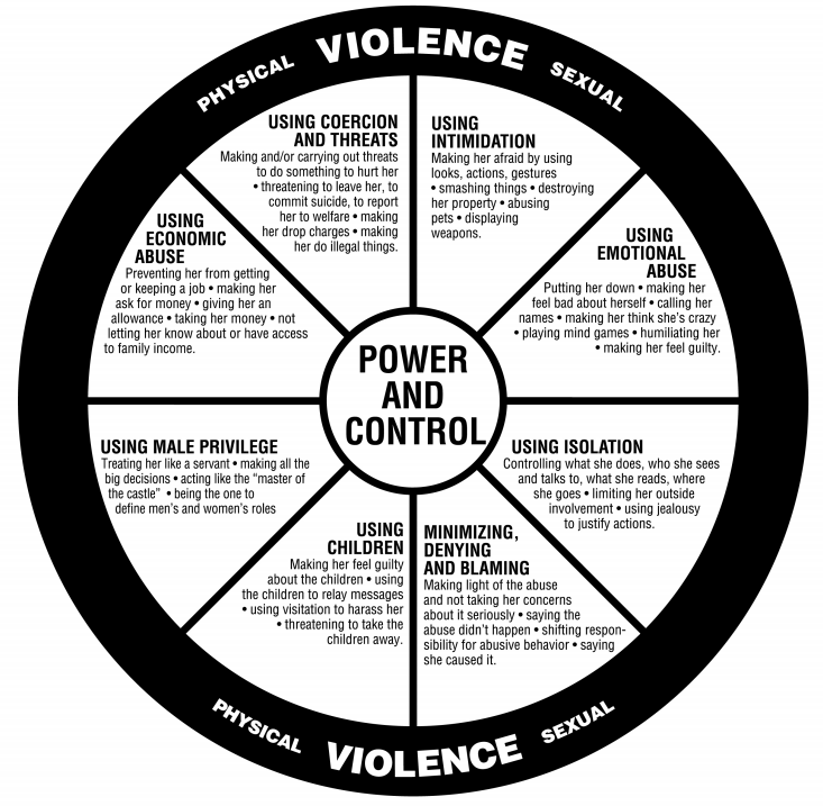
For so long, and even today, shame accompanies even talking about abuse of any form: verbal, physical, emotional, psychological, financial, and the list goes on. According to a 2023 report from the Connecticut Family Violence Arrest Report, there were 16,023 family violence reports made.
There are warning signs to look out for in relationships, not just with partners, but friends and family, because an “abuser” can be anyone. A few warning signs are:
- Pressuring you to use drugs or alcohol.
- Intimidating you through threatening looks or actions.
- Insulting your parenting or threatening to harm or take away your children or pets.
Long before I was born, my family dealt with domestic violence. As the story goes, my grandmother was slapped by her husband, my grandfather, who also abused alcohol. And then, as it does in so many families, two of her daughters (one being my mother) dated and later married men who hit them.
I am living proof that the cycle can be broken.
The cycle can be broken too by the abuser. This Domestic Violence Awareness Month I encourage you to reach out to someone who you suspect may be the abuser, and see how/if you can support them in getting the help they so desperately need.
If you are in need of support, please know you are not alone. You can find help at 211. The CT Safe Connect, Domestic Violence Hotline is also available 24/7 and you can call or text (888) 774-2900.
If you or someone you know is in trouble, you can contact the Domestic Violence Hotline at 1.800.799.SAFE (7233), Text START to 88788 or chat live with someone who can help.


Great and Important coverage. We need to find ways to make it easier for people under threat to get help.
This is Megan’s son Justin. I am absolutely heartbroken by these events, losing my mother devastated me beyond anything you could ever imagine. Another thing more devastating is the absolute lies that are being told based on what Butch said Stanley Mulvey was not my mother‘s boyfriend. My mother was hired by the state to be a caregiver for this asshole. She also did hospice care for his father. Also, this is a great tragedy and I don’t even I have not even been able to wrap my head around any of this. My mom and I spoke every day on the phone and which was obviously abusive to her. They did date at one point when I was younger, but he used, but he was sent to prison for attempting to murder her a long time ago, and they blamed it on a brain tumor that he had removed, but he was still a total violent asshole. My mother is the losing My mother has ruined probably my entire life. I will never be the same after this. I hated Butch or Stanley more than anything in the world. My mother was the most kind, generous, loving, caring person in the world, even to people who didn’t deserve it, her compassion and wisdom and love or endless, and I hate that people are saying they were in a relationship. They were not in a relationship that is a lie, a flat out lie and that needs to be the people need to stop saying that they were not in a relationship. She was hired by the state to be a caregiver for him