


One of the most fascinating periods in the town’s history, at least to me, is the period of time from 1900-1925. Stratford was evolving at light speed in population, demography, housing, and religion. What had been, for 260 years, a very staid, agrarian, puritanical New England town was rapidly becoming a town of hundreds of homes, occupied by thousands of newcomers with no familial or historical ties to the town.
All of this change required new, young thinking, and Stratford’s old-line, deeply-rooted residents were not really prepared to face such a monumental task. For the first 20 years of the twentieth century, Stratford’s leadership and town government moved ahead pretty much as it had done since its founding. However, when the young veterans returned from World War I, having seen much more of the world than any of their forebears, they returned with their own thoughts on how Stratford should move forward.
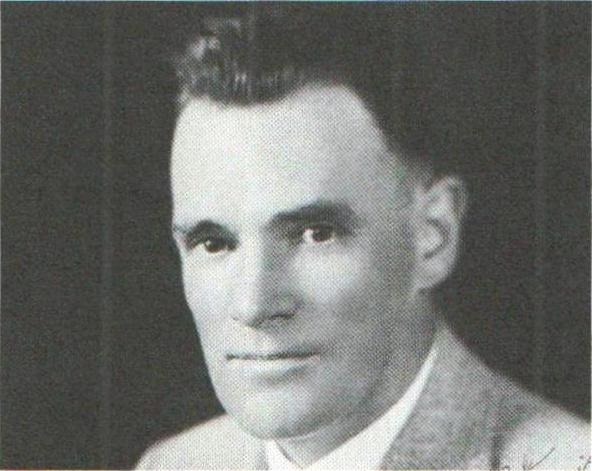
In February 1964, Donald Sammis, the first Town Manager Stratford had up until 1932 whom the residents actually liked, was asked to discuss how Stratford changed from a Selectmen form of government to a Council-Manager form of government. His recollections are insightful and humorous. The text of this interview is lengthy, so we’ve edited and excerpted a small segment for your reading pleasure.
Stratford’s politics ran along strict party lines. We had very violent fights between the Republicans and the Democrats, but under the surface, there was a lot of collusion. Lots of times the leaders of the parties would get into a huddle and come up with candidates. They’d put up a candidate who was bound to lose on one side and one who was bound to win on the other. The next election they might reverse the process.
There was lots of skullduggery going on, and the town’s affairs were quite frequently very sloppily conducted. The selectmen form of government worked out beautifully in the days when Stratford was primarily a farming area because most of the selectmen were fellows who had farms of their own and could spare the time from their farm work to run the town’s affairs.
Actually, the town’s business consisted primarily of assessing and collecting taxes, taking care of the town poor, and taking care of the highway system, which was all dirt roads. It meant we had to have road scrapers, gravel trucks, horse-drawn vehicles, and that was the way business was conducted in town.
Back in about 1910, when the Council-Manager form of government first became effective in the United States, some of the local people seemed to be very much interested in it. I became interested myself. There was a lot of street conversation on the subject in town over a period well-preceding World War I.
When World War I was over, there were a lot of young fellows like myself, Harold Delacour, Harry Flood, maybe a dozen or more of us, who were taken into the Republican town committee because they thought that our veteran background would be helpful in their election program.
The first election that we veterans participated in succeeded in electing James Lally as the First Selectman. Jim was quite a character. He had two horses and a dump wagon, and he used to work for the town a great deal prior to being elected First Selectman.
He was famous for one thing: he could chew tobacco and spit so that his expectorate would always land in the right place. He used to sit at his desk in the town hall with his feet on the desk. If some lady came in and asked questions or something, he would continue to sit there with his feet on the desk. Maybe he’d have his hat on, and in between conversations he’d be hitting the spittoon accurately with his tobacco chews.
The first aid provided by the newly returned veterans to the Republican Town Committee was quite successful, and they thought that they better keep the veterans busy. They decided to have some special committees which would carry on between elections so the veterans wouldn’t lose their enthusiasm and their working habits.
A committee was appointed consisting of Roy Lewis of the H. J. Lewis Oyster Company (who lived then in the old Samuel William Johnson house at the corner of Main and Broad Street), Ralph Sherwood (who lived at Paradise Green), and myself (who lived on Academy Hill Road). Our task was to review the existing Town Charter, the rules and regulations of the Charter, and determine what needed to be done in the way of alterations to the financial side of the Charter.
We had a couple of meetings, and then became disgusted. We decided that what’s the use of patching up an old quilt. Let’s make a new one. We then decided that we’d prefer, and present, a proposal for a new modern charter. We got the information on the Council-Manager form of government from the National Municipal League. We made a report at the next meeting of the Town Committee. We told the Committee that the thing to do was to abandon our present charter and take on the Council-Manager plan.
Shang Wheeler was the moderator of the town committee, and he said, “you’ve heard the report, what do you do with it?” Ivan Morehouse arose and said, “I think these fellows are out of order. They weren’t told to do this at all. I’ve moved the committee to be discharged with a kick in the pants”.

So they did. They voted us out. When that meeting was over, we came out onto the sidewalk and stood there talking, Ralph, Roy, and I. We decided if they don’t want our proposal, heck with them. We’ll go ahead and pursue it anyway. We decided to organize a Charter Committee of 100 prominent citizens. We had no difficulty forming that Committee. And, that was the beginning of it.
We’ll hear more from Mr. Sammis in the near future.


Now that’s some interesting town history! I look forward to the next installment.