


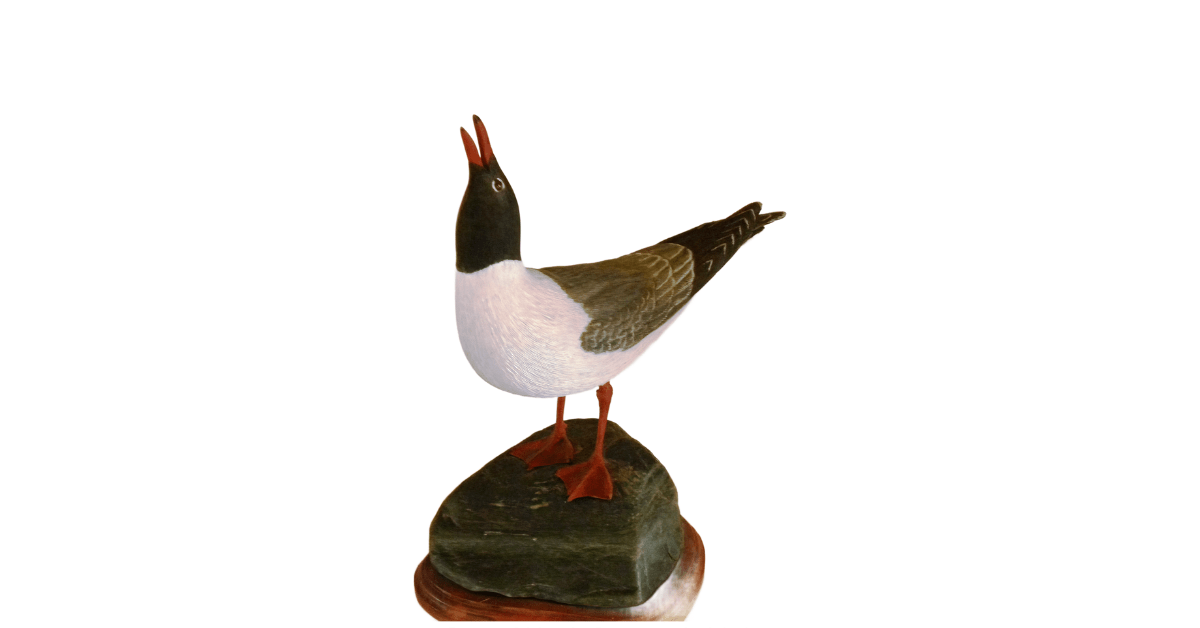
Hank Sprouse is a friend of mine. He’s one of a dying group of craftsmen who create accurate, life sized carvings of birds of all species from a block of wood. The creations that Hank produces are accurate down to coloring, shape, and the size of a pre-selected bird subject.
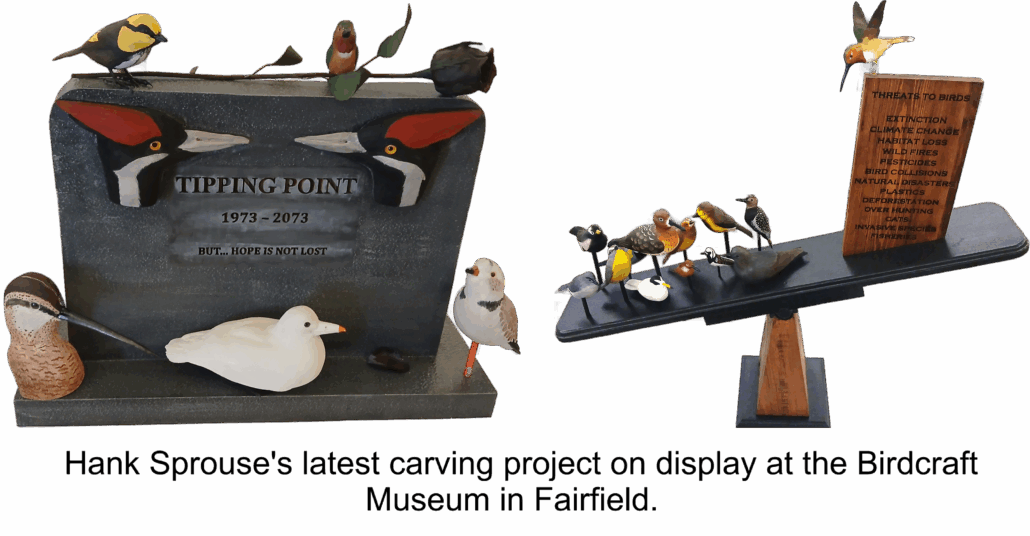
I first met Hank in the early 2010’s when Hank would display his carvings at the annual bird festivals Stratford used to hold at Stratford Point. Hank wasn’t the first Stratford bird carver I’d met. I had the privilege of meeting, knowing, and serving on the Connecticut Audubon Board with Jack Tierney. Jack was a long-time resident of the Beaver Dam neighborhood in Stratford’s north end. Jack would absolutely wow me with the carvings he produced.
So, where and when was bird carving cool, and how did it find its way to Stratford? Albert Davids Lang came to Stratford in 1863 from Rahway, New Jersey. Laing’s birth parents were very well-to-do. They owned a textile store and another home in Manhattan, but Albert had a passion for the outdoors and for hunting. Stratford was a very well-known locale for duck hunting in the 1860s because enormous flocks of ducks would come to settle, feast, and rest at the confluence of the Housatonic River and Long Island Sound.
Laing is credited with founding the Stratford School of Decoy Carvers (an informal “school” of men who shared an interest in decoy carving and learning carving techniques from each other). When Laing passed away in 1886, the informal role of leader of the “school” was assumed by Ben Holmes. Ben had been good friends with Laing before Laing’s death. Holmes was the only Stratford carver to produce decoys commercially.
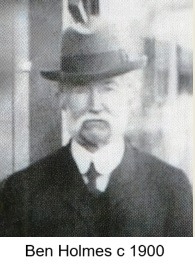
Men like Laing and Holmes created the Stratford style of decoy, which was engineered specifically for the river conditions of the Housatonic. Because the Housatonic was a continuously flowing river and not a placid bay on the Sound, their decoys had to be designed to ride high in the river currents. The decoys all had specially designed breasts for that reason. These high breasted decoys became the trade-mark of the Stratford School of Decoy Carving.
After Holmes’ death, leadership of the Stratford School fell to Reg Culver, Willard Baldwin, and Roswell Bliss. These men copied Holmes’ decoy patterns and founded the third generation of Stratford decoy carvers. When Charles “Shang” Wheeler came to Stratford from Westport in the 1890s, he developed an interest in decoy carving and learned from Culver, Baldwin, and Bliss.
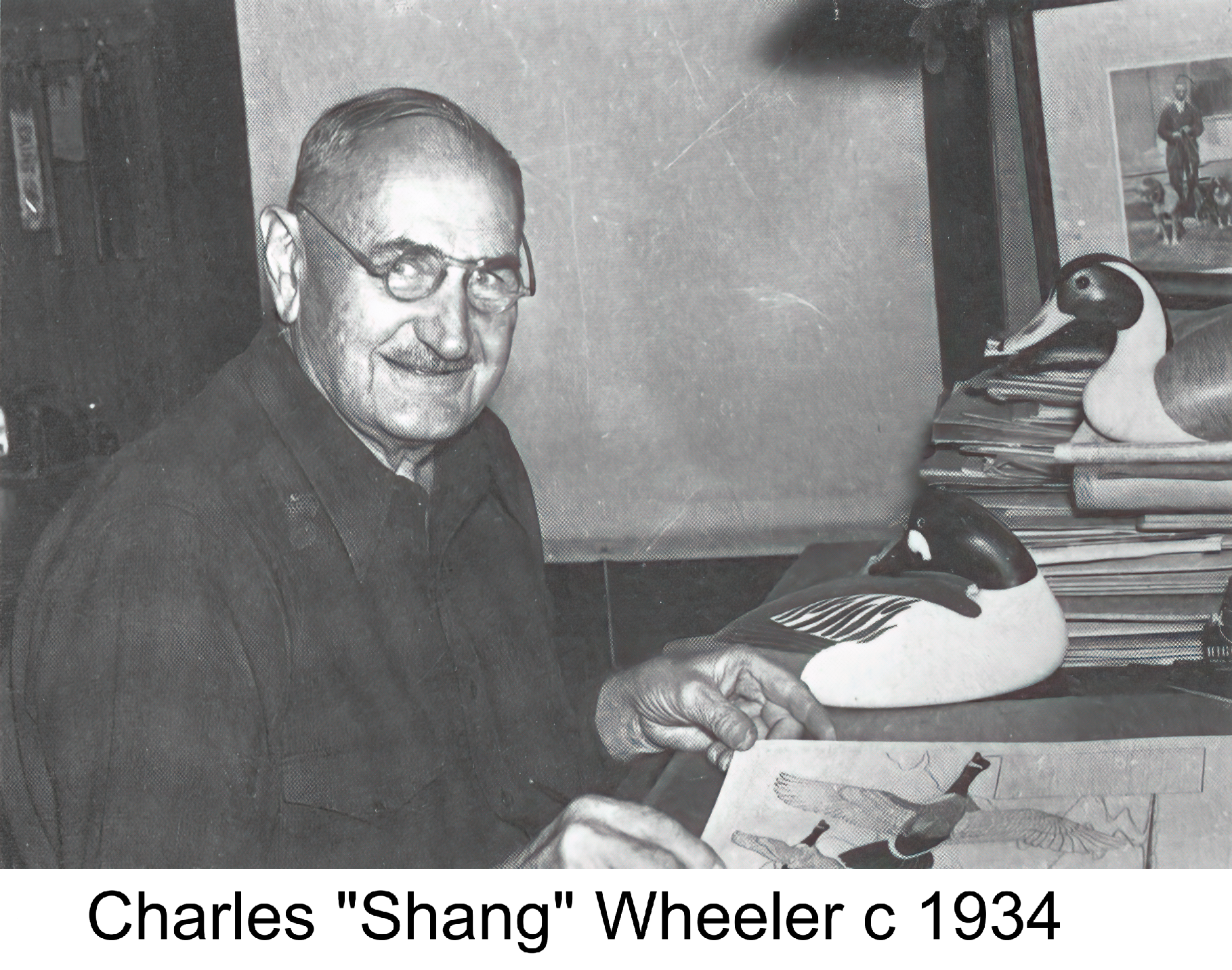
Most importantly, Wheeler turned decoy carving into an art form. Every bird carving competition Shang entered he won, until he stopped entering because it really wasn’t a contest for him any longer. By the time of Shang’s death in 1949, decoy carving had fallen by the wayside since the once abundant bird life of Stratford had been decimated by over-hunting, environmental deterioration, and pesticides like DDT.
The fourth generation of Stratford carvers was born, and taking a page from Shang’s carving lessons, the fourth generation began to carve all species of birds as an art form, not just ducks and water birds. This fourth-generation crafted carvings so life-like that it is nearly impossible to detect the difference between one of their carvings and a real bird. Of course, the carvings don’t move or make a sound.
Hank Sprouse, Jack Tierney, and Don Schuler were really the last masters of this dying craft. Jack and Don have both passed away, but fortunately, Hank continues to carve at his Stratford home. Hank was part of a carving show this past weekend at the Connecticut Audubon Birdcraft Museum on Unquowa Road in Fairfield. The carvers at this show displayed some remarkable, life-like bird carvings.
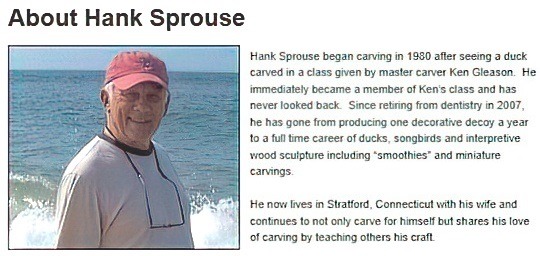
While we realize this art form is not going to be kept alive by a new generation of carvers, we’re saddened that a skill such as bird carving, one that put Stratford on the map of hunters, carvers, and art collectors, is passe. However, as long as we have Hank with us in Stratford, we hope he will continue to display his work. We’re looking to find a venue for Hank, and any of his carver acquaintances, to display their works in Town at least one last time.
While we’re searching for that venue, we intend to post photos, every Friday, of bird which were crafted here in Stratford. You may follow these weekly carving posts at https://www.facebook.com/stratford400/.


I was lucky enough to view a Hank Sprouse display at the Stratford Historical Society and was impressed with his skill….the birds he carved were more than ducks on display and extremely life like.