

Saturday, December 13, 2025
HomeArts & LifestyleBlack: History Month: The Pullman Story

Black: History Month: The Pullman Story

Labor Unions Put On Notice

Just a few years after the Civil War, the Chicago businessman George M. Pullman began hiring thousands of African-American men—including many former slaves—to serve white passengers traveling across the country on his company’s luxury railroad sleeping cars.

While they were underpaid and overworked and endured constant racism on the job, the Pullman porters would eventually help to fuel the Great Migration, shape a new black middle class, and launch the civil rights movement.

Rise of the Pullman Palace Car Company

In 1859, as the railroads were expanding their reach across America, Pullman convinced the Chicago, Alton and St. Louis Railroad to let him convert two old passenger cars into new and improved sleepers. These more comfortable, luxurious sleeping cars were an instant hit, affording wealthier passengers the amenities they were accustomed to at home and allowing middle-class travelers to enjoy a taste of the good life.

The first Pullman porter began working aboard the sleeper cars around 1867, and quickly became a fixture of the company’s sought-after traveling experience. Just as all of his specially trained conductors were white, Pullman recruited only black men, many of them from the former slave states in the South, to work as porters. Their job was to lug baggage, shine shoes, set up and clean the sleeping berths and serve passengers.

The Perfect Servants

George Pullman was open about his reasons for hiring Negro porters: He reasoned that former slaves would know best how to cater to his customers’ every whim, and they would work long hours for cheap wages. He also thought that black porters (especially those with darker skin) would be more invisible to his white upper- and middle-class passengers, making it easier for them to feel comfortable during their journey.

“He was looking for people who had been trained to be the perfect servant,” the historian Larry Tye, author of Rising from the Rails: Pullman Porters and the Making of the Black Middle Class, told NPR in 2009. “He knew they would come cheap, and he paid them next to nothing. And he knew there was never a question off the train that you would be embarrassed by running into one of these Pullman porters.”

But despite the undeniable racism behind Pullman’s employment practices, he ended up giving advantages to people who desperately needed them. In the early 1900s, a time when many other businesses wouldn’t hire African Americans, the Pullman Company became the largest single employer of black men in the country.

The Life of a Pullman Porter
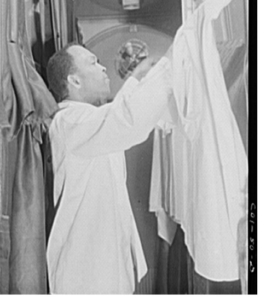
A Pullman porter making up an upper berth aboard the “Capitol Limited” bound for Chicago, Illinois in 1944.

Working as a Pullman porter became a coveted job, even a career, and many brothers, sons and grandsons of porters followed in their footsteps. Porters were paid more than what many other black workers made at the time, and the work was not backbreaking, when compared to field labor. More importantly, they got to travel the country, at a time when this was unthinkable for the vast majority of black Americans.

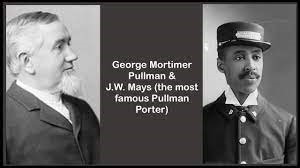
As Pullman porters became famous for their superior service, many former porters moved on to jobs at fine hotels and restaurants, and some even moved up to the White House. Porter J.W. Mays first served President William McKinley in his sleeping car; he would later spend more than four decades in the White House, serving McKinley and the eight presidents who followed him.
But, along with the opportunities they enjoyed, Pullman porters undoubtedly had to put up with a good deal of prejudice and disrespect. Many passengers called porters “boy” or “George,” after George Pullman, regardless of their real names. This was an uncomfortable throwback to slavery, when slaves were named after their owners.

Pullman porters often worked 400 hours a month, with little time off. While their salaries were envied in the black community, they were among the worst-paid of all train employees. Tipping was built into the pay structure, which saved the company money but encouraged porters to solicit tips, fueling their later reputation as grinning “Uncle Toms” who exaggerated their servitude to increase their tips.

Porters Form First All-Black Union

By the mid-1890s, the American Railway Union had organized most Pullman employees, but refused to include black workers, including porters. Formed in 1925, the Brotherhood of Sleeping Car Porters (BSCP) was organized by A. Philip Randolph, the social activist and publisher of the political and literary magazine The Messenger.

Due to strong opposition by the Pullman Company, Randolph and the BSCP had to fight for more than a decade before securing their first collective bargaining agreement—and the first-ever agreement between a union of black workers and a major U.S. company—in 1937. In addition to a big wage hike for porters, the agreement set a limit of 240 working hours a month.

Randolph and other BSCP figures would go on to play key roles in the civil rights movement, helping to influence public policy in Washington D.C. that ultimately led to passage of the 1964 Civil Rights Act.

Edgar D. Nixon, a Pullman porter and leader of the local BSCP chapter in Montgomery, Alabama, was instrumental in starting the bus boycott in that city following Rosa Parks’ arrest in December 1955. Because he was often out of town working as a porter, Nixon enlisted a young minister, Martin Luther King Jr., to organize the boycott in his absence.
Pullman Porters Legacy

While the mid-1920s marked the high point of business for the Pullman Company, the emergence of the automobile and the airplane as alternative modes of transport cut significantly into railroad business over the decades that followed. By the 1950s, passenger train service was on the decline, and in 1969 the Pullman Company ended its sleeping car service.

By then, however, the impact of Pullman porters had stretched far beyond the railroad, with lasting economic, social and cultural effects. From the beginning, porters had served as change agents for their communities, carrying new musical forms (jazz and the blues, for example) and new radical ideas from urban centers to rural areas, and from North to South. Their influence undoubtedly helped fuel the Great Migration, during which some 6 million African Americans relocated from the South to urban regions of the North and West.

By viewing the lives of wealthier white Americans up close, Pullman porters were able to see clearly the differences between these lives and their own. Armed with this knowledge, many porters saved up money to send their children and grandchildren through college and graduate school, giving them the education and opportunities they hadn’t had themselves.

In turn, these children and grandchildren would form the nation’s growing black professional class, many of them going on to become outstanding figures in a vast array of different fields, from law (Supreme Court Justice Thurgood Marshall), politics (San Francisco Mayor Willie Brown, Los Angeles Mayor Tom Bradley) and journalism (Ethel L. Payne of the Chicago Defender) to music (jazz pianist Oscar Peterson) and sports (Olympic track star Wilma Rudolph).

Author

RELATED ARTICLES

LEAVE A REPLY

Please enter your comment!
Please enter your name here

Most Popular

Recent Comments

Seamus Matteo on An Expression of Gratitude
raul gerena on The Stories We Tell
Barbara Heimlich on Zombie Barbie Returns to Library!
Cynthia Loynd on A Tribute to Teaching
Angelique D Jones PhD on Jahseh Martinez Funeral
Barbara Heimlich on When Bird Carving Was Cool
Rhonda Voos on Retail Politics
Dinushka De Silva on Retail Politics
David Chess on Letter from the Editor
Stephanie Philips on Letter from the Editor
Richard Sylvester on Blue Lion Jazz in Stratford
Kenneth G Matteau on CT Assembly Bill HB 5004
Lisa on Cash for Trash
Sharon Arsenault Heckley on Combating Rumors and Gossip
Karen P. Burke on Special Education Costs
Paula Sweeley on Tariff Talk
David Chess on A Woman of Substance
Ashley Lotzer on Goody Bassett Exonerated!
Ted van Griethuysen on In Memoriam: Richard Pheneger
Paula Sweeley on It’s Pie Time of Year!
Paul A. Tavaras on Election Roundup
Zoltan Toman on My Veterans Quilt
Ted van Griethuysen on Have You Voted?
Zoltan Toman on Mark Your Calendar
Ben on Trash Update
Taxpayer's Worst Nightmare on Interview with Dr. Uyi Osunde
Seamus Matteo on The Long Haul Trucker
Seamus Matteo on Letter to the Editor
Seamus Matteo on Stratford Street Takeover
Paula Sweeley on Stratford Street Takeover
Seamus Matteo on Longshoremen’s Strike
Jas. M. McHale on Library Gets State Funding
David Chess on Bankruptcy Filing Denied
Joe LaBash on LET THEM EAT … PIZZA?
Matthew Whitney Lechner on To Protect and Serve
Janeen Navarro on Love is Love, Stratford, CT
Moshe Rabeinu on Transportation Updates
Ted van Griethuysen on General Lafayette’s Last Visit
John Kamenitsky on Interview with Dr. Uyi Osunde
E roig on Trash Update
Mallory Benjamin on Trash Update
sick of stupid people on Trash Update
Tara May on Trash Update
Patricia DeGemmis on Trash Update
Connie Kristu on Trash Update
James serreti on Trash Update
Debbie on Trash Update
David Chess on Teen Violence
Andy Byrne on Spotted Lantern Fly
William J. Chiarenzelli on Traffic Safety Cameras
Mary Budrawich on Spotted Lantern Fly
David Chess on Norah
Beverly Blackwell on Statement by Dr. Uyi Osunde
Paula Sweeley on Statement by Dr. Uyi Osunde
Dee Hiatt on The Poetry Corner
David Chess on The Poetry Corner
david chess on The Stories We Tell
Paula Sweeley on Trash Update
Lou on Trash Update
Janine Aggott on Trash Update
David Chess on The Poetry Corner
James on Trash Update
Randall Stewart on Army Engine Plant Plans
Micharchangel on Trash Update
Dominic on Trash Update
Ted van Griethuysen on Letter To The Editor
Cathy B. on Trash Update
Ted van Griethuysen on A Cautionary Teacher’s Tale
David Chess on The Poetry Corner
Gary Brian Tanguay on Blues on the Beach
Jas. M. McHale on New Trains for Amtrak
JM McHale on Memorial Day Parade
Lisa Carroll-Fabian on BOE Finance Committee Special Meeting
David Chess on The Poetry Corner
Chris Johannessen on The School Budget De-Mystified
Paula Sweeley on BOE Budget Not Set In Stone
David Chess on The Poetry Corner
Henry Bruce on Stratford BOE Being Sued
Sara B on Whose Money is it?
Dr. Karen P. Burke on Dr. Uyi Osunde Press Release
Greg Carleton on Stratford BOE Being Sued
Paula Sweeley on Stratford BOE Being Sued
Ted van Griethuysen on Dr. Uyi Osunde Press Release
Greg Reilly on Animal Cruelty
David Chess on The Poetry Corner
Paula Sweeley on ALPHA
Ted van Griethuysen on Letters To The Editor
Barbara Heimlich on Teakwood Estates
Barbara Heimlich on Letters To The Editor
Tina Manus on Letters To The Editor
Ben Leone on Teakwood Estates
Marca Leigh on Teakwood Estates
Paula Sweeley on Teakwood Estates
Julie Lawrence on A Fight for Equality
David Chess on The Poetry Corner
Dee Hiatt on The Poetry Corner
Paula Sweeley on Bankrupt Stratford Part 3
Barbara Heimlich on ALPHA
on ALPHA
Barbara Heimlich on Bankrupt Stratford Part 2
Barbara Heimlich on ALPHA Program Staff Members
Barbara Heimlich on Librarians Matter
Kara Flockhart on Librarians Matter
Paula Sweeley on ALPHA Program Staff Members
Cheryl Dwyer on Bankrupt Stratford Part 2
Barbara Heimlich on Bankrupt Stratford Part 1
Barbara Heimlich on Reinstate Dr. Uyi Osunde
Paula Sweeley on Bankrupt Stratford Part 1
Paula Sweeley on BOE Budget
Trish on BOE Budget
David Chess on BOE Budget
David Chess on Chairman Interview
Paula Sweeley on BOE Budget
Barbara Heimlich on Celebrate Stratford 2024 Events
Trish on Budget Meeting
Barbara Heimlich on Budget Meeting
Caitlin A on Budget Meeting
David Chess on Budget Meeting
Barbara Heimlich on Letter To the Editor
Barbara Heimlich on Snow in Will’s Garden
Jocelyn Ault on The Poetry Corner
Ruben Matos on Letter To the Editor
Ted van Griethuysen on Letter To the Editor
David Chess on The Poetry Corner
Ted van Griethuysen on Snow in Will’s Garden
Michael Kalweit on Stratford: The Stories We Tell
Barbara Heimlich on Why We Love to Hate I-95
Barbara Heimlich on Town Council Meeting-January 8
Patricia H O'Brien on The Poetry Corner
Barbara Heimlich on Poetry Corner
Barbara Heimlich on Hawley Lane Development Back
Chris Johannessen on Hawley Lane Development Back
David Chess on Poetry Corner
Greg Reilly on New Year – New Housing
donna m conroy on New Year – New Housing
Patrick Hennessey on Poetry Corner
David Chess on The Poetry Corner
Gail M. Liscio on Fire and Ice Festival
Teresa Kona on Happy Thanksgiving
James M McHale on Night Safety Program
Ben Leone on Why a Theater??
Ben Leone on Shakespeare Theatre
David Chess on The Stories We Tell
Ted van Griethuysen on The Stories We Tell
Ben Leone on Broken Promises
Paula Sweeley on The Heart of the Matter
Ted van Griethuysen on Opinion: Shakespeare Theatre
Ted van Griethuysen on Why a Theater??
Barbara Heimlich on Town Council Candidates
Barbara Heimlich on Shakespeare Park Sundial
David Chess on The Poetry Corner
donna conroy on Goody Bassett Exonerated
John Florian on Poetry Corner
Danny Cook on Town Council Candidates
David Chess on Poetry Corner
Paula Sweeley on Letter to the Editor
Paula Sweeley on Know the Vote!
Paula Sweeley on Democrat Meet and Greet
David Chess on The Poetry Corner
Paula Sweeley on Shakespeare Presentation
David Chess on The Poetry Corner
David Chess on The Poetry Courner
David Chess on Mileage Tax
Trish on Prove It!
Donna Marie Conroy conroy on Stratford’s Horseshoe Crabs
David Chess on Shakespeare Theatre
David Chess on The Poetry Corner
Patty Spermer on District 6 Election Forecast
Barbara Heimlich on Slipper Shells Invade Long Beach!
Paula B Sweeley on The Soap Box
Paula Sweeley on Attack Garden Pests
Paula Sweeley on Letters To The Editor
Paula Sweeley on Center of Controversy
Nels C Pearson on “Nature Is Only Sleeping”
Janet Cocca on Champagne ?????
manustina@gmail.com manus on Letter To The Editor: Center School
Paula Sweeley on You better watch out
Paula Sweeley on Stratford Crier Voter Guide
Paula Sweeley on Remington Woods
Paula Sweeley on Stratford Crier Voter Guide
Paula Sweeley on Sunset Boulevard
Karen P Burke on Make Your Voice Heard
Paula Sweeley on Celebrating Pride Month
Paula Sweeley on Tennis and Trees
Patricia on Save Our Salt Marsh
Patricia on Obituary: Joan Joyce
Paula Sweeley on Tennis and Trees
Paula Sweeley on Update: Democracy In Action
Tom G on The Soap Box
Woodie on The Soap Box
Paula Sweeley on Tennis and Trees!
Paul! Sweeley on Tennis and Trees!
Bill OBrien on Auld Lang Syne
Patricia on Auld Lang Syne
Trish on Stratford Stars
Paula Sweeley on Town Council District 7
Paula Sweeley on Letters To The Editor
Patricia on Let the Games Begin!!
Paula Sweeley on Let the Games Begin!!
Barbara J Bosco on Never Forget!
Paula B Sweeley on Never Forget!
Paula B Sweeley on Center School Update
Barbara Heimlich on Where Am I?
Paula Sweeley on June is Gay Pride Month
Rosemary Martin Hayduk on “This is Not Field of Dreams.”
Jorge castro on Drive-Thru Food Pantry
JESS P. GELTNER on Know Your Town: First District
Paula Sweeley on Candidate: Dr. James Simon