


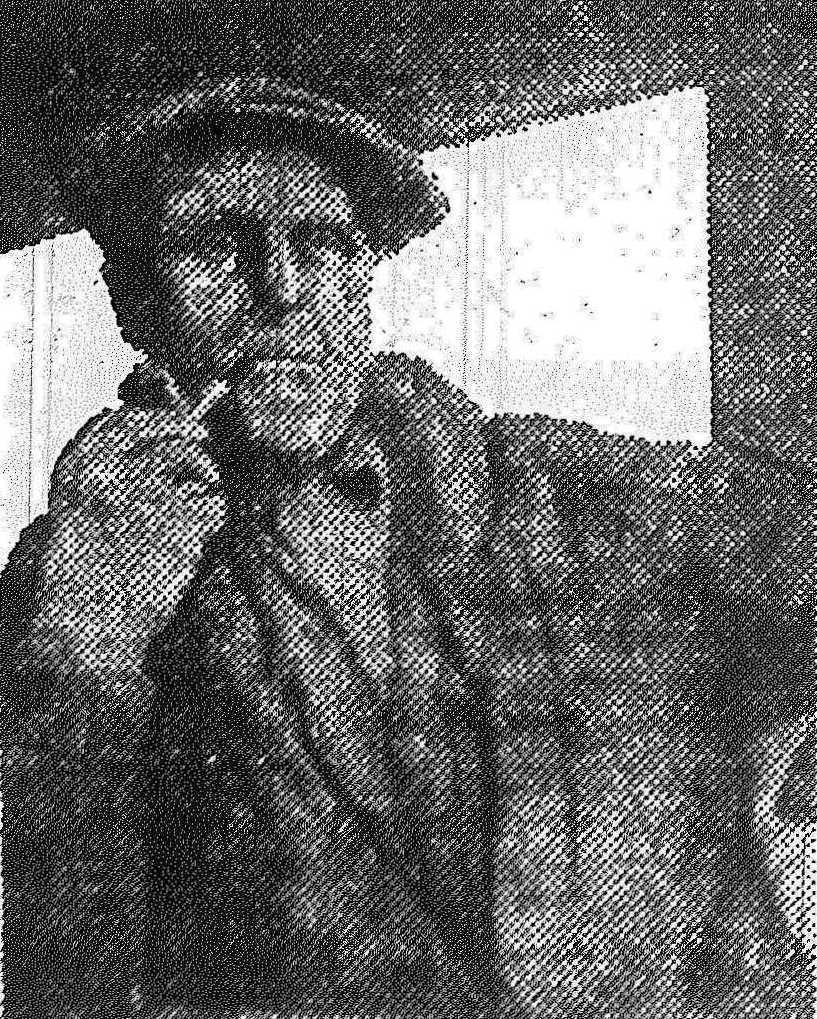

When Stratford was settled in 1639, it was governed by a set of laws enacted by the Connecticut (Colony) General Court. These laws became known as the “blue laws”, and were aimed to enforce moral standards and regulate behavior in the Connecticut Colony. The laws prohibited such things as traveling, cooking, making beds, and kissing on the Sabbath (Sunday).
Most of the old blue laws have been repealed or abolished. Most of us will remember not long ago when our package stores were never open on Sunday, due to one of the last vestiges of the blue laws.
As the blue laws began to fade into Stratford’s historic past, there were those in town who were not fond of letting them go. Some interpreted the blue laws quite literally up, and into, the early 20th century.
The Hartford Courant published an interesting item on July 6th, 1892. “An effigy of the Rev. Joel S. Ives, pastor of the Congregational Church in Stratford, was hung in front of his dwelling by boys the morning of the Fourth. Mr. Ives was awakened by a tremendous din, and observed the performance with some interest.”
The foregoing was followed on July 7th with this further installment. “The hanging in effigy of the Rev. J. S. Ives by boys at his home in Stratford, already noted in The Courant, is explained by the fact that he recently publicly rebuked some of his Sunday school scholars for dissipation and profanity. He also preached against the Sunday sale of soda and cigars, and this was a further impulse to the act. The affair is generally condemned in the village.” Rev. Ives was determined to hold onto the strictures of the blue laws, which he believed should be strictly enforced.
An even livelier account of this incident appeared in The New York Times on July 5th, 1892.
PARSON IVES HANGED IN EFFIGY
CITIZENS OF STRATFORD DISSATISFIED WITH THE MINISTER’S CONDUCT.
BRIDGEPORT, Conn., July 4. – The residents of the village of Stratford, three miles from this city, are greatly excited over an incident which occurred there during the early hours of this morning. The Rev. Joel S. Ives, pastor of the Congregational Church of that town, was hanged in effigy on a large elm tree standing in front of the handsome residence he occupies on the main street of the village.
Within the past few days there have been rumors that efforts would be made to enforce the blue laws in the village, and closing of the drug stores and stopping the sale of Sunday papers were contemplated. The village is connected with the city by the East End Street Railway Company, and on Sundays during the summer hundreds of residents of this city enjoy the ride over the shade-lined streets to Stratford.
It was also intended to stop the running of the street cars. Parson Ives was the leader in the movement. It has not met with favor, especially among the younger element.
During the early hours this morning, while the celebration of the Fourth of July was in progress, Parson Ives’s residence was visited. The visitors, it is reported to-night, [were] composed of some of the well-known people of the village, but that did not deter them from hurling huge firecrackers on the stoop of the parson’s residence. This was but the first step.
This morning when daylight came, hanging from a large tree was what appeared to be the form of a man. The figure swung to and fro in the breeze and was viewed by hundreds of people. It was taken down some hours afterward, but it is not known who took the trouble to remove it.
Mr. Ives has been pastor of the church for the past five years. A well-known resident of the town said to-night that Mr. Ives had made himself very much disliked of late, and the affair of last night is a polite invitation for the parson to leave town.
While the “blue laws of Connecticut” made no mention of such things as drug stores, street cars, summertime at the beach, or newspapers, apparently, Rev. Ives’ interpretation of the “blue laws” did include all these much more contemporary innovations. It seems to us it would have been much better, and safer, for the good Reverend, had he kept his private musings on Sunday decorum to himself.

