


Can you separate art from the artist? The singer from the song? The dancer from the dance? Every once in awhile I’ll read the biography or autobiography of an artist (mostly I read about writers), and I’ll be disappointed in that artist’s character. For some reason, creative people’s lives are often messy. When that happens, it often changes, in a negative way, how I feel about his/her art. I’ve often thought that the lives of artists should be kept secret.
Why do we want to know about their lives? Because of our intense curiosity about other people’s lives, especially artists and famous people. We want to understand the artist’s influences—and from day one. We learn that they were poor or rich. Their father beat them or their mother smothered them.They never went to school or they had 3 PhD’s. They never married or they married five times. But in their biographies, we also learn about the artist’s character, his faults and frailties, his weirdities, meannesses, cruelties. I could tell you about many, many writers who were rather terrible people. Jack London was quite the racist. Charles Dickens was an unbelievably nasty husband, Norman Mailer almost stabbed his wife to death. And so on. Many, many writers were alcoholics. Of course, now I am doing the very thing I deplore—being nasty by outing writers regarding their nastinesses. Not nice. (But then, I’m a writer, too.)
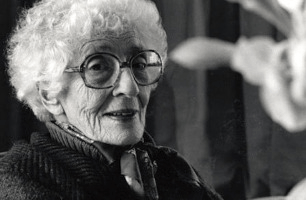
May Sarton was a famous Belgian-American novelist, poet, and memoirist. She was extremely prolific, having written 53 books. (She died in 1995.) I recently read one of her memoirs, “The House By The Sea,” and though the Poetry Foundation describes her memoirs as “…rambling and honest accounts of her solitary life,” and “Several reviewers have hailed Sarton’s ability to connect with the essence of humanity,” I have to wonder how honest her memoirs really are. And Sarton as solitary? In “The House by the Sea,” so many friends, visitors, dinners, week-end guests, trips to far places where there are a lot of other writers…this is not a solitary life. By comparison, I live in a cave.
In Sarton’s authorized biography by Margot Peters, (“authorized” meaning it was written with the cooperation and approval of the one being written about), Peters writes: “People who had the misfortune to become her intimates almost universally came to regret it. On the slightest of pretexts, Sarton subjected them to terrible scenes, nights of weeping, rages, blowups. She was expert at emotional blackmail, and behaved badly in restaurants. Self-absorbed and insensitive, May Sarton wooed others with extravagant attentions, only to betray and humiliate them later with scant regard for the chaos left in her wake.” Holy cow. I would run from this woman.
As I do with London, Dickens and Mailer, I admire Sarton’s writing. But now I’m wondering about her honesty and, as a result of reading about her character, the judgmental critic in me even wonders about her writing.

But are not artists human, too? Why wouldn’t they have demons and bad habits, as we all do? Artists have two lives, one their personal existence and the other their talented career. But how is it that a person can be both bitchy and also “…able to connect with the essence of humanity”? To be able to write about the essence of humanity is, I think, the real talent of a writer. They also, of course, need to be able to put this essence into words. But the humanity part…well, that is why I feel a writer should be a good person. I do not expect athletes and actors and race car drivers and violinists and surgeons to be superior people. They have their particular talent, they have their particular life. But, in my opinion, the writer, since the good ones understand humanity enough to write about it, should be humane.
So why aren’t they always? Because the art and the one who created it are separate things. The book the writer is writing is a created thing, a thing outside of the writer. Writers often speak of their books as their babies. Man is dust, and unto dust shalt return, but a book is words, and the hope is it will not die, but be the author’s ticket to immortality. A book is conceived by an author, but it is other than the author. Just as parents can conceive a child who is very different from them, a book can be philosophically very different from its author. A book can be full of compassion and insight, but the author not.
In the middle of writing this article, the memory of a poem by Galway Kinnell on the subject of great writers and their bad behavior popped into my head. (And now I could write another essay on unconscious influence vs. plagiarism. But that’s for another time.)
Read it and weep.
Shelley
By Galway Kinnell
When I was twenty the one true
free spirit I had heard of was Shelley,
Shelley, who wrote tracts advocating
atheism, free love, the emancipation
of women, the abolition of wealth and class,
and poems on the bliss of romantic love,
Shelley, who, I learned later, perhaps
almost too late, remarried Harriet,
then pregnant with their second child,
and a few months later ran off with Mary,
already pregnant herself, bringing
with them Mary’s stepsister Claire,
who very likely also became his lover,
and in this malaise á trois, which Shelley
had imagined would be “a paradise of exiles,”
they lived, along with the spectre of Harriet,
who drowned herself in the Serpentine,
and of Mary’s half sister Fanny,
who killed herself, maybe for unrequited
love of Shelley, and with the spirits
of adored but often neglected
children conceived incidentally
in the pursuit of Eros—Harriet’s
Ianthe and Charles, denied to Shelley
and consigned to foster parents; Mary’s
Clara, dead at one; her Willmouse,
Shelley’s favorite, dead at three; Elena,
the baby in Naples, almost surely
Shelley’s own, whom he “adopted”
and then left behind, dead at one and a half;
Allegra, Claire’s daughter by Byron,
whom Byron sent off to the convent
at Bagnacavallo at four, dead at five—
and in those days, before I knew
any of this, I thought I followed Shelley,
who thought he was following radiant desire.


