


Unity in Community
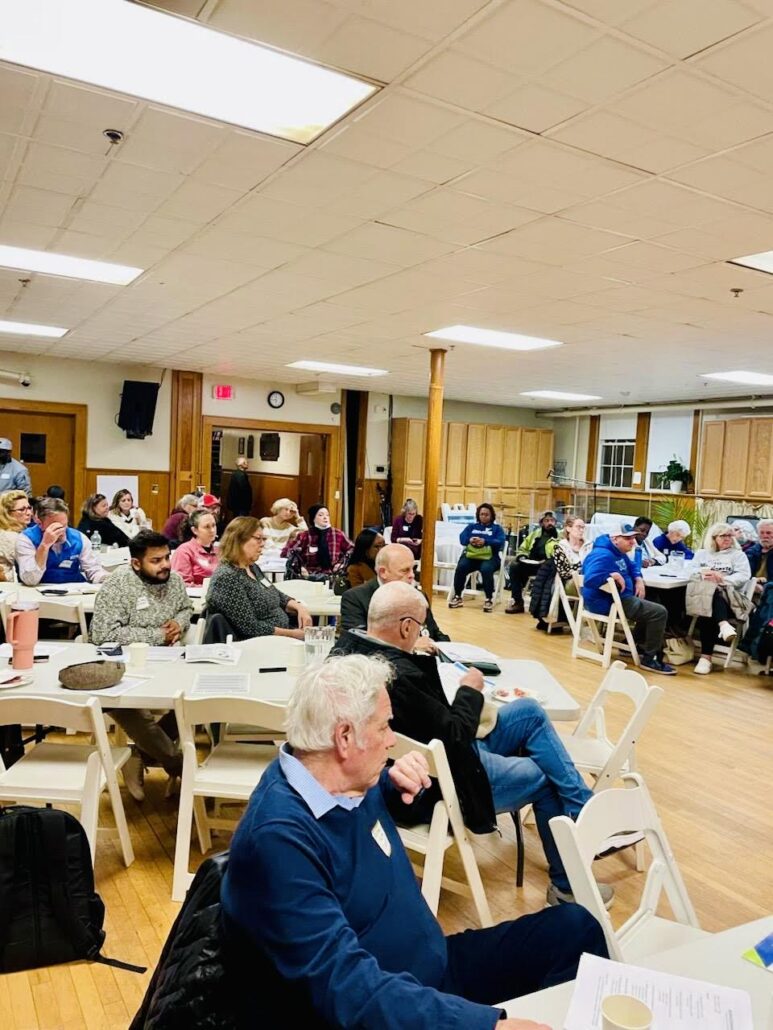
This past Wednesday night (Nov. 12), more than 60 people from across Stratford gathered in the lower level of First Congregational Church – neighbors, volunteers, educators, and service providers. My deepest thanks to all those who planned and participated in the event, and to all those who attended.
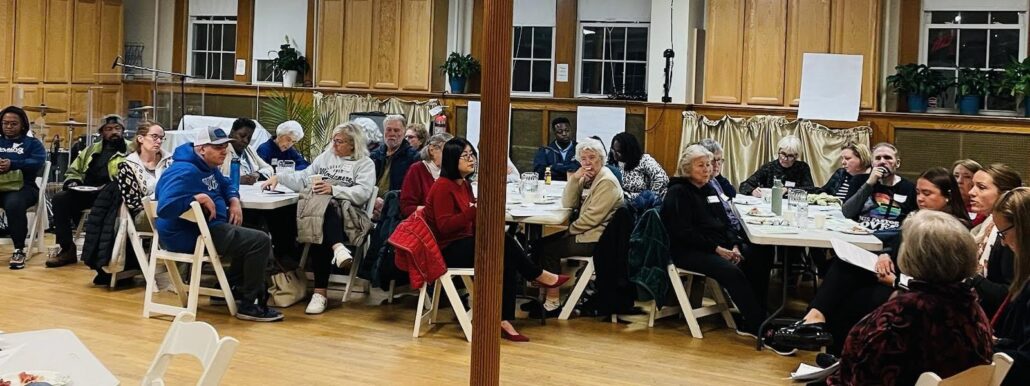
The goal was to better understand the needs of our community and the realities of homelessness. The theme: through unity, we can weave together our assets to become a stronger community for all, including our neighbors who struggle with housing.
Some of the sobering facts shared:
- 1,103 Stratford residents called 211 this year because they were experiencing a housing crisis, and 27% did not receive the shelter support they needed.
- 134 people in Connecticut have died this year as a direct result of experiencing homelessness.
Margaret LeFever, Program Manager at the Housing Collective, emphasized that the rapidly rising cost of living in comparison to wages is a central factor in creating this dire situation. While some assume those in a housing crisis “just need to work,” she noted that many are working — wages simply aren’t keeping pace with costs. In Stratford, a single income earner now needs to make $37.83 an hour to afford a two-bedroom apartment, far beyond what many of our exceedingly hard working neighbors earn.
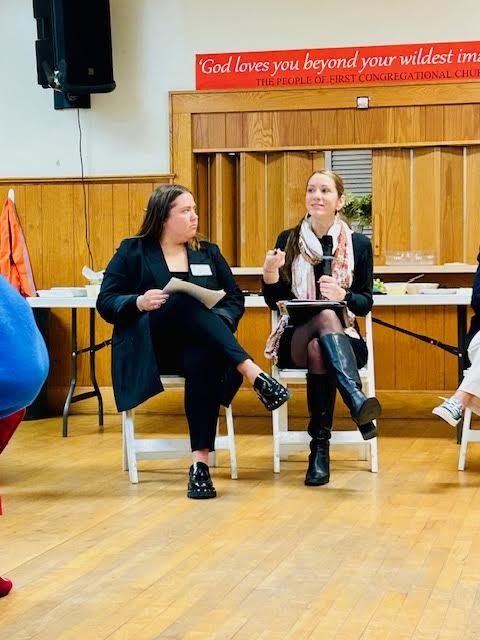
Jennifer Paradis, Executive Director of the Beth-El Center, described the shifting landscape since the pandemic: “Every year since COVID, overall homelessness has risen — and this past year, unsheltered homelessness rose by 45%.” She stressed that no single factor explains the trend. Connecticut lacks sufficient housing, and the shortage is especially acute for those with low income or disabilities. Economic pressures, climate-related disruptions, healthcare expenses, domestic violence, fires, stagnant wages, and high housing costs intersect to leave more people precariously housed. Layer on thin social networks, Paradis said, and “even a small crisis can push someone into homelessness.”
Paradis also underscored the role of relationships — often the differentiator between someone who weathers a destabilizing event and someone who becomes unhoused. Her work shows building “relationships” that create paths of hope and success in positive outcomes.
Stories of lived experiences took center stage as well.
School Superintendent Heather Borges and Stratford United Methodist Church volunteer Pamela Robertson shared what they witness every week. Each person has their own story, and it is the partnerships and cross connections that have the power to provide resources which can change the trajectory of an individual or family.
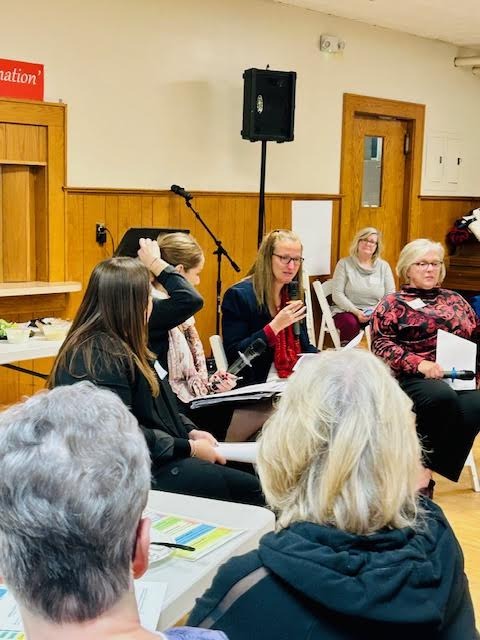
Borges highlighted the importance of the McKinney-Vento program, which protects the educational rights of students experiencing homelessness. Schools can provide transportation, meals, connection, and stability — but only when staff know a student is in crisis. Fear and shame keep many students silent. Borges said. “One of the best things we can offer is consistency. When everything else feels like it’s falling apart, school can be the one steady place.” She also noted a major gap: federal resources support enrolled students, not their siblings or guardians, leaving many families under-resourced. Community partnerships, she said, are essential.
She shared the story of a senior who spent weeks couch-surfing after their family left them on their own. Too afraid to disclose their situation, the student began arriving late to school until a persistent, caring teacher uncovered the truth. Staff mobilized transportation, meals, counseling, and community support. The student not only stabilized but eventually stepped into leadership roles, speaking at assemblies about resilience. “Having people believe I could still finish school,” the student said, “gave me hope and helped me know I had a future.”
Another example came from a counselor working with a family of seven who found shelter, but miles away. The older students were working long hours to help the family, leaving little time for sleep or academics. Through coordination with the local YMCA and community partners, the family received targeted support that lifted some of the burden. Within a month, the students reduced work hours, regained rest, and improved in school. “A weight was lifted,” staff said — a powerful reminder that small interventions can change a young person’s trajectory.
Behind every statistic, Borges added, are families escaping domestic violence, people displaced by fires, parents who lose work unexpectedly, and newcomers seeking safety. “They get up, they come, they go to school,” she said. “They’re doing everything they can — they just need the community to stand with them.”
The night’s theme was unmistakable: when systems work together and neighbors step in, hope rises.
The faith community’s role also came into focus.
Pamela Robertson described how Stratford United Methodist Church partners with the Sterling Community Center to provide food resources, alongside many other congregations in town. Their church location is accessible, and their community breakfast has become an important gathering place. After COVID, needs rose sharply, prompting a collaboration with Nichols United Methodist Church that allowed them to expand meals to twice a month, with plans to continue growing. “The friends who come to our breakfast,” Robertson said, “reflect exactly the demographics we heard tonight.” They also run a low-cost thrift shop that provides for necessities.
Each November, they offer a unique program, using a tent out in front of their church. They offer free coats, hats, and gloves on their lawn — serving an estimated 250–300 neighbors through a simple give-and-take system.
The evening concluded with table discussions, prompted by Paradis’s central questions: What did you learn that surprised you? What are the unique resources and relationships that only Stratford can offer — neighbor to neighbor? The evening invited us to think beyond programs and to lean into the power of connection. It came together through the collaboration of a team deeply concerned about our neighbors—people bringing lived experience, professional insight, and simple human care. The Stratford Homelessness Task Force shaped this “community conversation” as an open space for learning and engagement. The effort grew out of Stratford’s community read of When We Walk By: Forgotten Humanity, Broken Systems, and the Role We Can Each Play in Ending Homelessness in America, which is available at the library as well.
What emerged was a reminder of the strength found in unity—of how we can better understand needs and use our collective impact to increase support. All were invited to continue this work. The Task Force will meet at First Congregational Church on December 3 at 4:00 p.m. to review the night’s insights and identify next steps.
If you’d like to be part of this effort, please email: openingdoors@thehousingcollective.org
Submitted by Jocelyn Ault of the First Congregational Church Social Justice Team, on behalf of a cross-sectional Stratford Homelessness Task Force—a group of 18 community members with diverse backgrounds who came together to imagine how Stratford might create a meaningful, inclusive community conversation and expand our shared commitment to addressing homelessness and housing.


