

There is a quote attributed to French philosopher Pierre Teilhard de Chardin which says, “We are not human beings having a spiritual experience. We are spiritual beings having a human experience.” To me, this quote is about our spiritual sojourn in life and how our experiences affect us. My recent trip to Spain evoked these feelings of reflection as I learned about the history of Spain, its culture and recalled past events from my upbringing.
As I grow older, I believe this increasingly, especially about my faith and how it helps me see the influence of God throughout my life. I was raised a Catholic and would talk to God in my prayers. Even though I never heard God’s voice audibly, I sensed a quiet acceptance that helped me to go on in life when my home life was restrictive and unstable.
In many Latin families, life revolves around the dominant male of the household. This was my experience. Whatever mood he was in, it set the emotional tone around the house. If he was in a bad mood or wanted us to be quiet, we did what we were told or risked getting hit or yelled at. When it was time to eat, he ate first and was given the biggest piece of meat when we had it. And we certainly didn’t have freedom to play with other children in the neighborhood (especially boys).
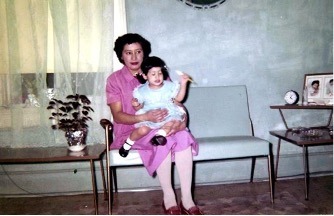
Despite that, I still remember him being handsome, funny and affectionate, when I was very small. Maybe it was because I was the first live-bone child. I found out in my adolescent years that my mother had two miscarriages before me. While my dad was happy with my presence, she didn’t seem to want to take care of me. She treated me as if I were an obligation and would often tell me that I embarrassed her but did little to help with my development and education. I think she was jealous of the attention I received. It wasn’t until later, after I found out about my dad’s philandering, that I could understand. Unfortunately, this caused her to always view me as her competition. I remember her making some rather outlandish accusations about me and my relationship with my dad that were very unkind and untrue.
Then, my dad became distant, harsh and punitive. I don’t know why. Perhaps it was something I did, but I was too afraid to ask lest I garner more scolding and disapproval. My mother was little comfort. I wanted to be anywhere but home, so I would escape by reading about other ways of living.
In the third grade, our class was planning a trip to the state capital, Springfield, Illinois. We were learning about American history in class. The teacher taught us a lot about the “land of Lincoln” and how to behave at a formal dinner. She made us practice table manners and how we should wait for the boys to help seat us in our chairs. When the time came to take permission slips home, for our parents to sign, I knew in my heart that I would not be allowed to go. The school even sent one of the Spanish-speaking counselors to talk to my mom, but I heard her beg him not to talk to my dad for fear of his reaction. So, I still had to attend school while everyone else got to go on the trip. I even heard a classmate say, “Lucy’s dad is mean.” They didn’t know the half of it.
The few times our family had a vacation, we would drive to Texas to see my grandparents, aunts and uncles and extended family on my mother’s side. Dad would drive. He didn’t let my mom drive. The few times he attempted to teach her drove her to tears because he was so impatient. It was clearly a means of control and isolation so he could dominate. Life dragged on.
One night, life stood still for a moment when we were woken up by the police and told that our father was dead. My mother responded as any bereft wife would with shock and some tears. Even though my dad was a womanizer, my mother did spend 17 years of her life with him and had 4 children from that union.
As for me, the shock turned into the realization that “I’m free.” Then the policeman blurted out, “He was shot.” So much for the nuance of a death notification. After all, this was the 70’s and the police were not concerned about how their words would impact a grief-stricken widow. My mother began to scream. This was not like her. She was going to disrupt everyone from their sleep. So, I grabbed her, shook her, and told her to “Shut up. Shut up.” before she woke my 2 little brothers. Then I said, “The first person you wake, you’ll have to tell them. (It wasn’t going to be me!) Do you want that?” She shook her head “No.” Then I said, “Sit down!” Oddly enough, she did as I asked. Truthfully, I still don’t know to this day how I managed to take command of that situation, but I believe God strengthened me to act as decisively as I did. The police sensed the awkwardness of the situation and said, “We have to go now.” I replied, “Not until you help me make some phone calls.” They tried to get out of the mess they created in our lives by saying they had to “watch their squad car because it had weapons in it.” So, I opened the curtains so they could see their vehicle. Then I handed them the number of my uncle in Texas so they could notify him. It turns out that my dad got into a disagreement with someone at a poker game. He and the other player went outside to “settle the problem;” and dad got shot several times in the parking lot. I was 15 when this happened.
For me, this event changed everything about my life. It made me very ashamed to be Latin or Hispanic because I was afraid of being perceived as coarse, violent, or disruptive. I also wanted to create better associations as opposed to being around bad influences or living with no affiliations, as before. After my dad died, I saw my mother struggle with finances, learn how to drive in her 40’s, and go back to her home in Texas, returning to a more confining life. It would take my whole life’s journey to understand who I am and to shape my own narrative instead of allowing others to define me. I have floundered a lot but am still learning about the rich and complex history of Latin culture and being a Hispanic woman in a post 20th century world. I am rediscovering the art and beauty, faith and superstition, as well as violence and passion that are embedded in my heritage. In the following essay, I will share what I learned from later travels as we continue this sojourn together.

