


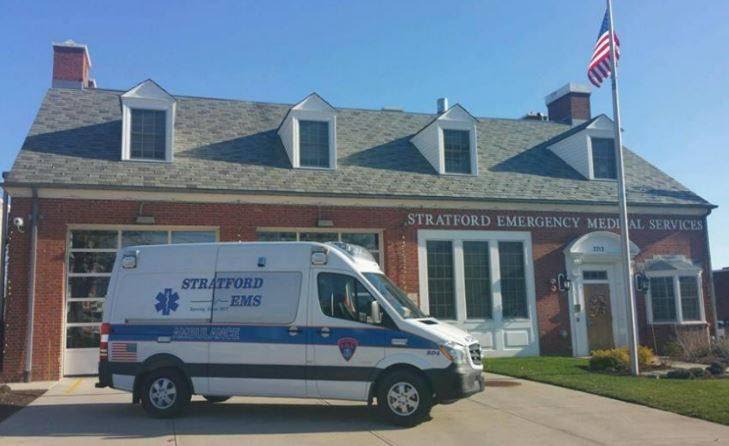
A Public Information Explainer from Stratford EMS
Emergency Medical Services (EMS) systems across the United States rely on mutual aid as a standard and necessary part of emergency medical service operations. The following is a public information explainer article from Stratford EMS to assist in understanding “mutual aid” in EMS as it works in Stratford.
Mutual aid is a planned, coordinated system where emergency agencies assist one another during periods when local demand temporarily exceeds available resources. This collaboration ensures that patients continue to receive emergency medical care even during peak demand, large incidents, or operational disruptions.
Stratford EMS (SEMS) serves as the Primary Service Ambulance Responder (PSAR) for the Town of Stratford, Connecticut, operating within a statewide EMS framework governed by Connecticut law and regional emergency response planning.
Like all public safety agencies, Stratford EMS must manage real-world operational conditions such as:
- simultaneous emergency calls
- hospital offload delays
- workforce attrition
- seasonal demand fluctuations
- major incidents or mass casualty events
Mutual aid is designed specifically to address these types of operational realities.
Operational data reviewed from January 2024 through early 2026 shows several key findings:
- Mutual aid usage has declined significantly since 2024
- Stratford EMS regularly provides mutual aid to neighboring communities
- During 11 of the 27 months analyzed, Stratford provided equal or greater mutual aid than it received
These patterns demonstrate that mutual aid reflects regional EMS system demand, not a Stratford-specific operational issue.
Stratford EMS continuously evaluates its operations and is currently pursuing strategic improvements through the Town’s annual budget process, that are expected to further reduce mutual aid usage while strengthening system stability.
What is Stratford EMS?
Stratford EMS is the Primary Service Ambulance Responder (PSAR) responsible for emergency medical response and ambulance transport within the Town of Stratford. SEMS provides all levels of EMS response and care (Basic life Support (BLS) and Advanced Life Support (ALS).
Responsibilities include:
- 24-hour emergency ambulance response
- emergency medical treatment, resources and transport
- participation in regional EMS response coordination
- disaster and mass casualty response planning
- continuous quality improvement (CQI)
Ambulance Deployment
Stratford EMS uses a data-driven deployment model, reviewed every six months through demand analysis.
The current basic ambulance staffing model:
| Time Period | Ambulances |
| Day Shift | 3 |
| Evening Shift | 3 |
| Overnight | 2 |
This deployment structure is designed to match historical call demand patternsand under normal conditions, can be adjusted in real-time based on the needs of the Town.
Demand Characteristics
Operational data shows:
- Peak simultaneous calls: 3+
- Peak demand hours: 10 AM – 6 PM
- An average 6.26% of daily calls occur during peak hours
These findings demonstrate that current staffing levels are generally aligned with actual operational demand – (although on the verge of needing additional coverage, which is reflected in our most recent budget proposal).
Workforce Attrition After COVID-19
Like EMS systems nationwide, Stratford EMS experienced workforce losses following the COVID-19 pandemic. Because SEMS is a normal operating division, these challenges will occur again in the future, as is the case with any other public safety department.
Personnel losses included:
- 1 Full-Time Supervisor
- 4 Full-Time Paramedics
- 1 Per Diem Paramedic
- 6 Per Diem EMTs
- 4 Volunteer EMTs
Workforce attrition has been widely documented across the EMS profession and continues to affect agencies nationwide. (The numbers above represent attrition directly attributed to post-COVID-19 activity only). When this occurred, SEMS administration employed a variety of mechanisms to limit operational exposure to the challenges associated with attrition. (We managed the situation in real time).
Who Defines How EMS Works in Each Community?
In Connecticut, municipalities are responsible for defining how EMS (including First Responder) services operate within their communities. This is done through the development of a Local EMS Plan and supported by the municipalities governance in coordination with EMS Administration and the stakeholders involved (First Responders, Dispatch, etc.).
This authority comes from Connecticut EMS statutes and regulations.
Each municipality develops a Local EMS Plan, which establishes:
- the Primary Ambulance Service
- first responder agencies
- mutual aid partners
- dispatch center agreements and protocols
- response standards
- regional coordination procedures
Local EMS Plans define how the EMS system should work and are reviewed and approved by the Connecticut Department of Public Health: Office of Emergency Medical Services(OEMS).
What is Mutual Aid?
Mutual aid is a formal agreement between emergency response agencies to assist each other when local resources are temporarily unavailable.
Mutual aid requests typically occur when:
- all local ambulances are already assigned to calls
- a major incident requires additional resources
- specialized response capabilities are needed
Mutual aid ensures patients continue to receive emergency care even when demand spikes unexpectedly.
Mutual Aid is NOT the same as “Auto-Aid”, which EMS agencies do not typically engage in. Auto-aid occurs when two agencies from different communities automatically respond to the same call as a matter or normal procedure. National data has shown this to be terribly unsafe in EMS response for a myriad of reasons.
What Mutual Aid is NOT
Mutual aid is sometimes misunderstood as a failure of the EMS system, agency or EMS leadership. This represents a lack of basic understanding of EMS.
Mutual aid does not indicate system failure, poor management, or insufficient staffing.
In fact, healthy regional EMS systems commonly show both mutual aid received and mutual aid provided.
Mutual aid only becomes problematic if agencies:
- lack coordination
- fail to monitor usage
- do not adjust operations when negative trends emerge
Stratford EMS actively monitors mutual aid activity as part of routine operational oversight.
Standards for Mutual Aid in Connecticut and National Best Practices
Connecticut EMS regulations do not define a specific threshold for acceptable or unacceptable mutual aid usage. There is no “one size fits all” standard because each municipality has different needs, geographical characteristics and resource capabilities.
The Primary Ambulance Service must ensure that the first emergency call is covered. Beyond that requirement, no state law defines a limit or target threshold on mutual aid usage.
Relevant standards and guidance include (Not an all inclusive list):
- Connecticut EMS Regulations
- Commission on Accreditation of Ambulance Services (CAAS)
- OSHA and CONN-OSHA safety requirements
- National Safety Council emergency planning guidelines
- NFPA EMS and emergency response planning standards
These frameworks emphasize regional coordination and operational monitoring, rather than rigid mutual aid limits.
Why Every EMS System Uses Mutual Aid
Emergency demand is somewhat unpredictable.
Communities experience fluctuations in call volume due to (Not an all inclusive list):
- weather
- seasonal activity
- traffic incidents
- population movement
- major events
If every town staffed enough ambulances for its worst possible day, costs to taxpayers would increase dramatically.
Regional mutual aid allows communities to share resources efficiently while maintaining reliable emergency coverage.
Common Reasons Mutual Aid is Used
Typical reasons include (Not an all inclusive list):
Simultaneous Emergencies
Multiple calls occurring at the same time.
Hospital Offload Delays
This can occur due to many factors during hospital offload. In Stratford, the average hospital offload time is approximately 30-45 minutes, temporarily reducing ambulance availability.
Peak Demand Periods
Certain hours (evenings) and seasons (Summer) typically experience higher call volume.
Major Incidents
Vehicle crashes, fires, or incidents involving multiple patients.
Regional Demand
Neighboring communities may also require assistance.
Staffing Challenges
Obviously, if there is a sudden change in staffing (for any reason), this can cause increased mutual aid usage while we work to adjust to attrition.
What Happens When All Ambulances Are Busy?
If all Stratford EMS ambulances are already responding to emergencies, dispatch may request a mutual aid ambulance from a partner agency.
However, Stratford EMS also maintains significant surge capabilitywhich dispatch would attempt to utilize first.
Additional resources typically include:
- Up to 2 surge ambulances
- Up to 2 fly car response units
SEMS can stand up to 5 ambulances and 4 flycars in addition to its 3 duty ambulances, if the need is required.
These resources can be staffed by:
- special operations personnel
- on-call staff
- administrative personnel who maintain operational certifications
This capability allows Stratford EMS to expand response capacity rapidly during large incidents or surge demand.
Regional EMS System and Mutual Aid Partners
Stratford EMS participates in a regional emergency response system.
Primary mutual aid partners include:
- AMR
- Yale New Haven Health – Y-Access
- Trumbull EMS
- Shelton EMS
- Valley EMS (VEMS)
- Milford FD EMS
These agencies regularly assist one another as part of a coordinated emergency response network. SEMS also participates in a region wide mutual aid compact including all EMS agencies within Region 1 (Fairfield County) of the CT EMS system. For major incidents, the state of CT can call up resources from across the state and is also considering an interstate compact with neighboring states demonstrating the point that mutual aid is a standard and regulated part of a healthy EMS system.
Stratford EMS Mutual Aid Data Overview (2024–2026)
Operational data from January 2024 through early 2026 shows a balanced mutual aid system.
How Mutual Aid is Managed at Stratford EMS
Mutual aid activity is monitored through a structured system that includes:
- daily operational review by the shift commander (Operations Supervisor)
- weekly analysis (EMS Administration)
- monthly reporting & analysis (EMS Administration & public safety committee)
- quarterly and annual system evaluation (EMS Administration)
- demand analysis (EMS Administration)
It is important to note that EMS data is automatically transmitted to OEMS when the EMS crew completes their electronic patient care report. SEMS monitors realtime dashboards and/or regional status screens that show where mutual aid is being used throughout the entire region. All mutual aid requests are reviewed by management to ensure appropriate operational adjustments are made.
Future Outlook: How the Proposed Budget Impacts Mutual Aid
Stratford EMS has proposed strategic improvements through the Town’s current budget process. Some of these strategic improvements are designed specifically to strengthen staffing stability and expand service capacity which directly impacts mutual aid consumption.
These initiatives are expected to:
- stabilize workforce levels
- improve operational flexibility
- increase coverage during peak demand periods
These improvements will increase revenue and reduce reliance on the Town’s general fund. If these investments are approved, Stratford EMS anticipates continued reductions in mutual aid usage over the coming years.
If the proposed improvements are not implemented, the current system will continue to operate safely and effectively; however, mutual aid usage will likely remain near current levels or increase slightly as regional EMS demand continues to grow.
What a True Mutual Aid System Failure Would Look Like
A genuine EMS system failure would involve:
- lack of mutual aid agreements (this does NOT exist in Stratford)
- absence of monitoring or oversight (this does NOT exist in Stratford)
- completely uncovered emergency calls (this does NOT exist in Stratford)
- inability to deploy additional resources or adjust when necessary (this does NOT exist in Stratford)
- failure to recruit replacement staff (this does NOT exist in Stratford)
Stratford EMS maintains structured agreements, operational monitoring, and surge capability to prevent these conditions.
How Residents Benefit From Mutual Aid
Mutual aid provides several benefits to Stratford residents:
- faster response during large incidents
- regional disaster preparedness
- backup resources during high demand
- efficient use of taxpayer resources
These benefits help ensure that patients receive emergency medical care when they need it most.
Accessing or Sharing Mutual Aid Data
It is important to understand that all EMS data may contain protected health information (PHI) and patient identifying information (PII), and all data sharing must comply with:
- HIPAA privacy regulations
- Business Associate Agreements
- healthcare data protection laws
For those reasons, Stratford EMS does not typically share this data easily. Requests for mutual aid data should be submitted in writing to the Stratford EMS Director, as would be expected for any public safety data request.
Requests should include:
- purpose of the request
- intended use of the data
- specific records requested
This is so that EMS and the Town Attorney can determine what can be reasonably released and what is protected information.
Mutual aid is an essential feature of any modern emergency medical system.
Operational data demonstrates that Stratford EMS both, confirming the presence of a
Stratford EMS continues to:
- monitor system performance
- strengthen workforce stability
- coordinate with regional partners
- plan for future growth
The mission remains clear:
Provide reliable, professional emergency medical care to the residents of Stratford while maintaining a resilient regional emergency medical response network.
Mutual Aid Myths vs Facts
Myth: If an EMS agency uses mutual aid, it must be failing.
Fact: No, Mutual aid is a normal feature of modern EMS systems and often reflects simultaneous calls, offload delays, or regional surge conditions rather than failure.
Myth: Mutual aid only flows into Stratford.
Fact: No, Stratford also provides mutual aid to neighboring communities. While 100% of the timeframe reviewed demonstrated that outbound mutual aid was provided, in 11 (40%) of the 27 months reviewed, Stratford provided equal or greater mutual aid than it received. This increases revenue opportunities and reduces reliance on the general fund.
Myth: A good EMS system should never need help.
Fact: No town staffs permanently for every worst-case scenario. Good systems combine proper local deployment with regional support when demand spikes. Because of this, mutual aid is also a State of CT EMS requirement.
Myth: More mutual aid automatically means poor management.
Fact: This is absolutely false and an indicator of inexperience in the management of EMS systems. The more important questions are whether the agency monitors trends, maintains agreements, adjusts staffing, and uses surge capacity appropriately. This is the case in Stratford. Because SEMS has a singular mission focus (EMS) it can focus on the adjustments that need to be made to keep the system running well even when challenges emerge.

