


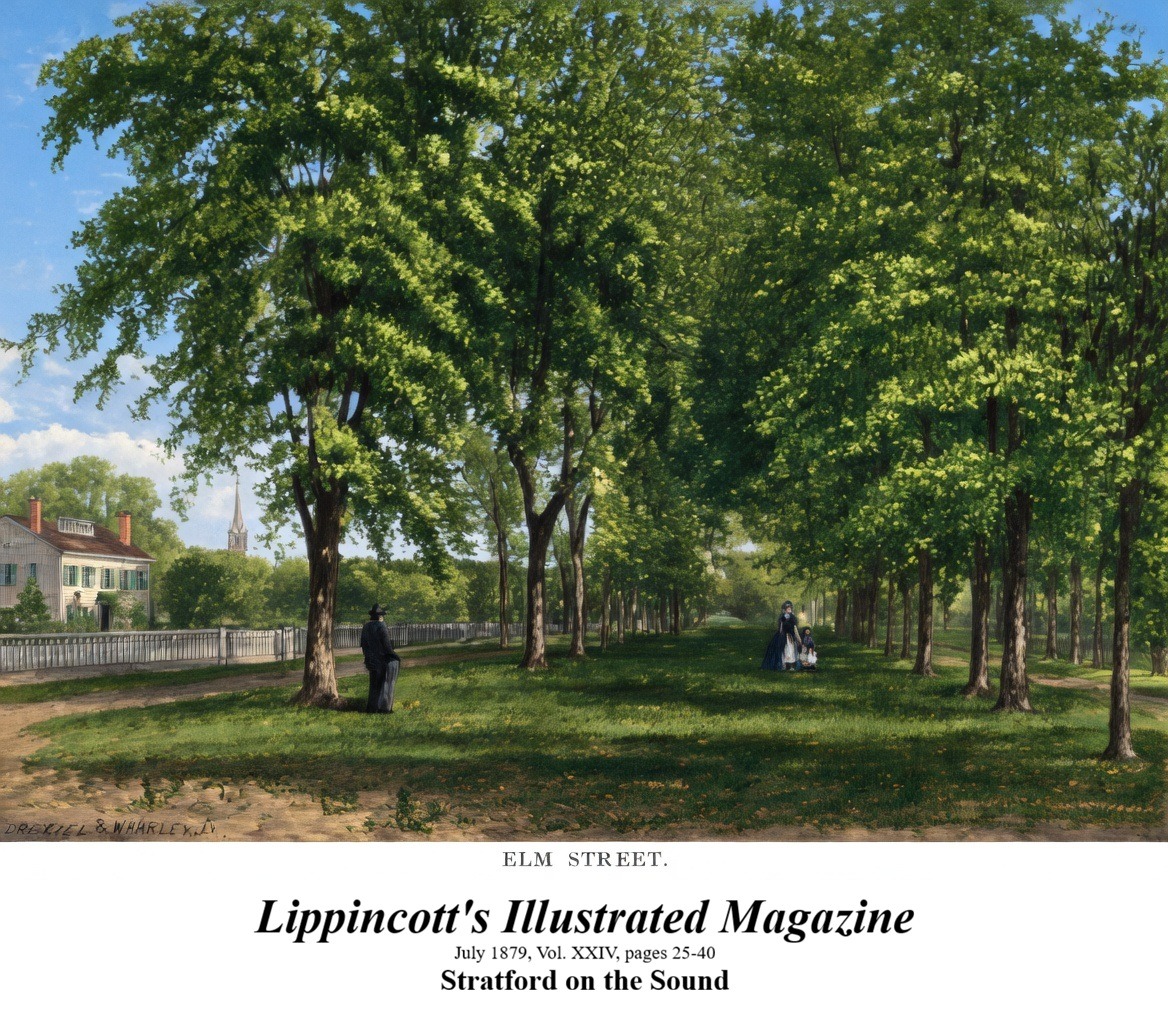
Stratford’s original tree cover was a mix of hardwoods and conifers. About 40% of the trees were white oak. Another large percentage were white pines. The third most numerous tree species was the American chestnut. Chestnut blight struck Stratford about 1910, and by 1920 most of Stratford’s chestnut trees were gone.
Stratford’s oldest trees were largely clear cut three times. The first time was the early settlement period up until 1680. By 1680 the town declared that no trees within the town’s borders could be cut and removed from the town. Also, all the white pines were declared property of the King of England during the pre-revolutionary years. It was illegal to cut a white pine in New England. One 200 foot white pine could produce all the lumber required to build a home of that period.
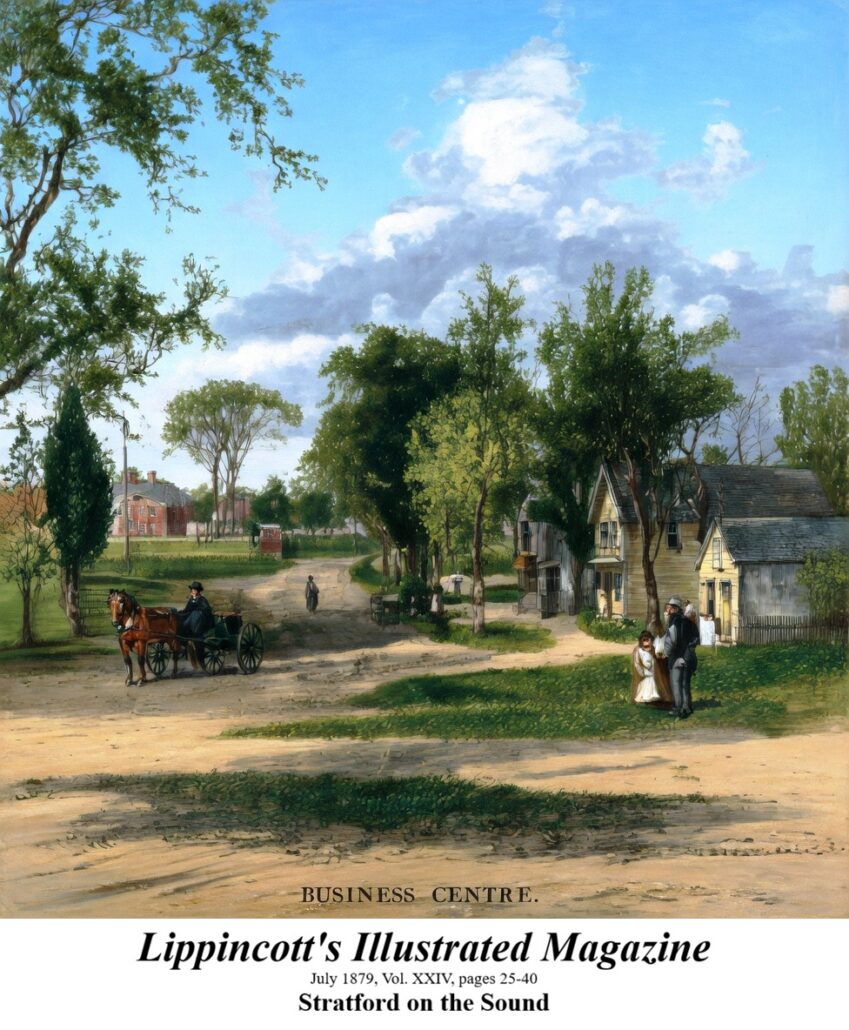
The settlers found a workaround known as a “wind fall”. If the wind blew over a tree on your property, it was legal for you to use the fallen tree. Consequently, the settlers assisted many “wind falls” in town.
We think of Roosevelt Forest as always having been covered by trees. However, the property comprising today’s Roosevelt Forest had precious few trees at the time the forest was created in 1934. Many of the remaining trees had been cut in an effort to supply Stratford’s poorest residents with heating fuel during the Depression. Most all of the large trees standing in Roosevelt Forest today were planted by boy scouts in the late 1940s through 1960s.
The first fruit trees were imported and planted in Stratford in 1640 by one of Stratford’s very first settlers. Fruit trees were extremely abundant in the Oronoque and Putney areas into the 1950s. Stratford produced large apple and peach crops at one time.
About 1700 elm trees were introduced to Stratford. While elms are native to Connecticut, they weren’t widely spread throughout the state until New Haven decided to line its town green with them in 1680. Soon after New Haven began planting elms, Stratford began lining its main roads with these graceful trees.
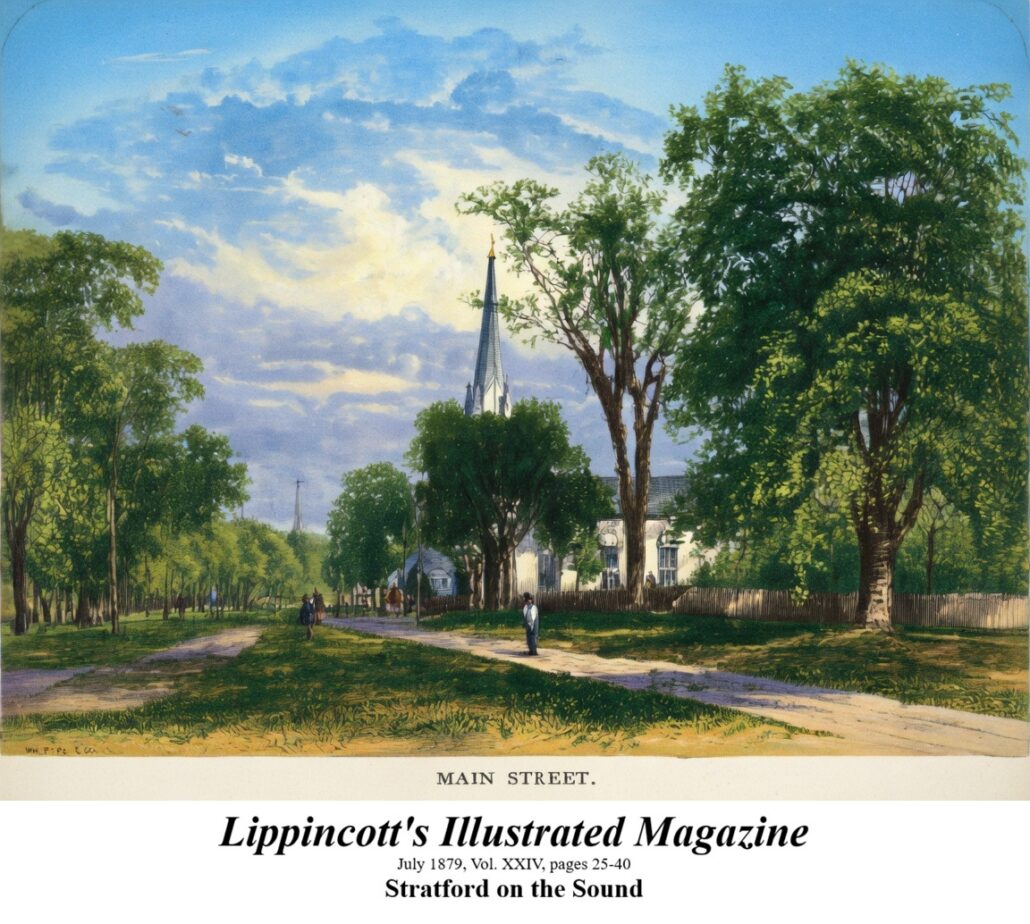
Elm Street was originally named Front Street. With the introduction and widespread planting of the decorative elms, Stratford became known for its beautiful elm trees. Many visitors to Stratford wrote about the elm trees in town. In 1876, 57 elm trees were planted to commemorate the centennial of the signing of the Declaration of Independence.
Insect damage was a problem for Stratford trees as early as 1900. We have photos from that time period where residents painted a ring of pitch around their precious trees, about 4 feet above the ground, to prevent the introduced gypsy moth caterpillars from climbing to the canopy. The elm trees in town were decimated first by the hurricane of 1938, then by Dutch elm disease which attacked Stratford’s elms beginning in 1934. By the early 1950s most of Stratford’s majestic elms were gone.
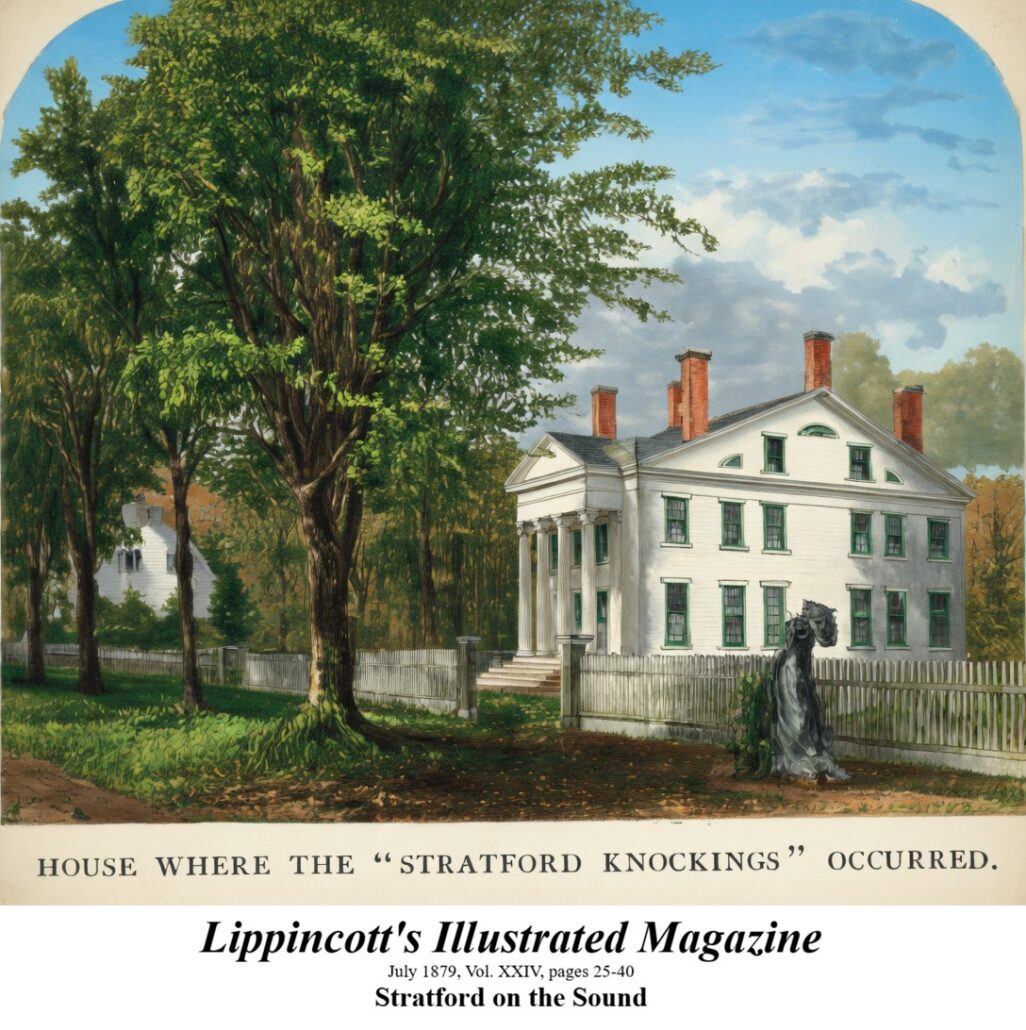
Up until about 2013, the largest remaining elm tree in Connecticut stood on the southeast corner of Stratford Avenue and Elm Street. The tree was determined to be no longer viable, so it was removed. One of the last remaining large elm trees in town stands on the grounds of the Stratford Historical Society.
Stratford’s beautiful trees were highlighted by a New York Times reporter visiting Stratford in 1868 as well as the Lippincott Illustrated Magazine in 1879. The town’s tree planting efforts on this past Arbor Day will, hopefully, replenish some of Stratford’s tree lined splendor.

