


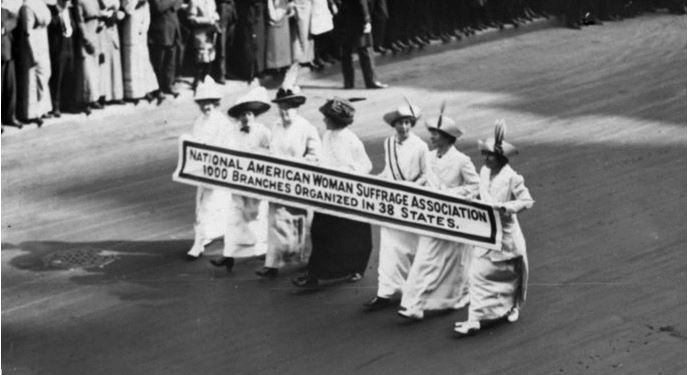
Women’s Suffrage Movement Roots in the Abolition Movement
Source: Lakshmi Gandhi; Earnestine Jenkins; History.com
In the fight for women’s suffrage, most of the earliest activists found their way to the cause through the abolition movement of the 1830s. Abolitionist groups such as the American Anti-Slavery Society (AASS), led by William Lloyd Garrison, provided women with opportunities to speak, write and organize on behalf of enslaved people—and in some cases gave them leadership roles.
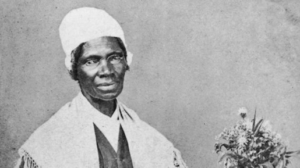
Prominent female abolitionists included the sisters Angelica and Sarah Grimké, Lucretia Mott, Harriet Beecher Stowe and the former slave Sojourner Truth, whose “Ain’t I a Woman?” speech in 1851 earned her lasting fame.
In the early years of the women’s rights movement, the agenda included much more than just the right to vote. Their broad goals included equal access to education and employment, equality within marriage, and a married woman’s right to her own property and wages, custody over her children and control over her own body.
After the Civil War, debate over the 14th and 15th Amendments to the Constitution— which would grant citizenship and suffrage to African-American men—inspired many women’s rights activists to refocus their efforts on the battle for female suffrage. Some, like Stanton and Susan B. Anthony, campaigned against any suffrage amendment that would exclude women, while some of their former allies—including Lucy Stone, Antoinette Brown Blackwell, Julia Ward Howe and Frederick Douglass—argued that this was “the Negro’s hour” and female suffrage could wait.
In 1869, Stanton and Anthony founded the female-only National Woman Suffrage Association, which stood in opposition to Stone and Blackwell’s American Woman Suffrage Association. The rift between the two sides endured until 1890, when the two organizations merged to form the National American Women’s Suffrage Association.
“Black suffragists came to the suffrage movement from a different perspective,” said Earnestine Jenkins, who teaches Black history and culture at the University of Memphis. Their movement, she says, grew out of the broader struggle for basic human and civil rights during the oppressive Jim Crow era.
But while many 19th-century women’s rights advocates got their political start in the anti-slavery movement, not all were keen on seeing Black men leapfrog women for voting rights with the 15th Amendment. Viewing the issues competitively, some leading white suffragists aggressively sidelined Black women—and their broader civil rights issues, like segregation and racial violence—from the movement. One strategy? Using their platforms to perpetuate stereotypes that women of color were uneducated or promiscuous.
Even after the 19th Amendment passed, promising that the right to vote would “not be denied or abridged by the United States or by any State on account of sex,” women of color continued to be barred from casting ballots in many states with tactics like poll taxes and literacy tests.
Suffrage battles continued for decades—often against a backdrop of intimidation and violence. Yet mid-century activists, like Fannie Lou Hamer, fought on, knowing the vote was a crucial tool for changing oppressive laws and dismantling entrenched racism. Here are five Black suffragists whose resourcefulness and persistence became instrumental in passing the 19th Amendment.
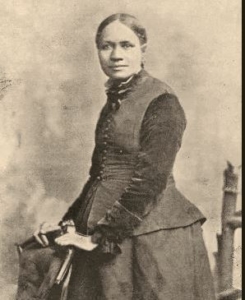
Frances Ellen Watkins Harper (1825–1911)
At a time in America when the majority of Black people were enslaved and women were rarely encouraged to have political opinions—much less share them in public—Frances Ellen Watkins Harper became a genuine celebrity as an orator.
Second only to abolitionist Frederick Douglass in terms of prominent African American writers of her era, the poet, essayist and novelist frequently went on speaking tours to discuss slavery, civil rights and suffrage—and donated many of the proceeds from her books to the Underground Railroad.
Born in Baltimore to free Black parents, Harper received a rigorous education at the Watkins Academy for Negro Youth, founded by her uncle Rev. William Watkins, an abolitionist and educator. Harper moved North in 1850 to teach, during which time she lived in a home that served as an Underground Railroad station. Hearing the stories of escaped slaves cemented her activism, along with the passage of an 1854 law that forced free Blacks who entered her home state of Maryland from the North into slavery. Unable to return home, she channeled her thoughts into activist writing and speaking.
“When it came to the cause of women’s suffrage, Harper was convinced it would not be achieved unless Black and white women worked together. But while Harper initially worked with leaders like Stanton and Anthony, she was also one of the first women to call them out in terms of their racism,” notes Jenkins. Harper’s most famous confrontation came when she spoke at the 1866 National Women’s Rights Convention. “You white women speak here of rights,” Harper told the crowd, calling them out for their lack of female solidarity across racial divides. “I speak of wrongs.”
Mary Ann Shadd Cary (1823–1893)
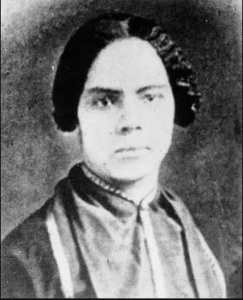
Mary Ann Shadd Cary, whose parents used her childhood home as a refuge for fugitive slaves, became the first black woman in North America to publish a newspaper, The Provincial Freeman, in which she fearlessly advocated for abolition. After helping recruit Black soldiers for the Civil War and founding a school for the children of freed slaves, she taught school by day while attending law school at night, becoming one of the first Black female law graduates in the United States in 1883. When the suffrage movement gained steam in the 1870s, after the 15th Amendment granted the vote to Black men, she became an outspoken activist for women’s rights, including the right to cast a ballot.
Cary’s legal and publishing background served her well in the fight for enfranchisement. In 1874, she was one of several suffragists who testified before the House Judiciary Committee about the importance of the right to vote. In her remarks, Cary stressed the unjustness of denying women—who were both taxpayers and American citizens—access to the ballot box. “The crowning glory of American citizenship is that it may be shared equally by people of every nationality, complexion and sex,” she told the committee.
Mary Church Terrell (1863–1954)
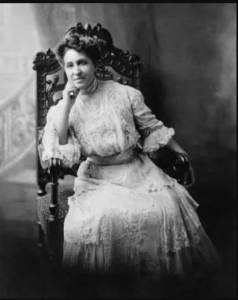
Mary Church Terrell, one of the first Black women to earn a college degree, was pushed out of the mainstream suffrage movement by white leaders, Black suffragists through the 1800s founded their own clubs in cities across the U.S. Along with church-based organizing, “the club movement was the foundation for so much activism by Black women in their communities,” says Jenkins. With the creation of the National Association of Colored Women (NACW) in 1896, suffragists Mary Church Terrell and co-founder Josephine St. Pierre Ruffin became instrumental in consolidating Black suffrage groups across the country. Their agenda went beyond women’s enfranchisement, addressing issues of job training, equal pay, educational opportunity and child care for African Americans.
Terrell, an educator, writer and organizer, also focused her work on fighting lynching, Jim Crow segregation and convict leasing, a system of forced penal labor. The daughter of formerly enslaved people who became successful business owners in Memphis, Tennessee, Terrell was one of the first Black women to obtain a college degree, earning both a bachelor’s and master’s degree from Oberlin College (Oberlin, Ohio). She also became the first Black woman appointed to the Washington, D.C.’s Board of Education, and led a successful campaign to desegregate the city’s hotels and restaurants.
In an 1898 address to the National American Women’s Suffrage Association, she summarized her life’s work: “Seeking no favors because of our color, nor patronage because of our needs, we knock at the bar of justice, asking an equal chance.”
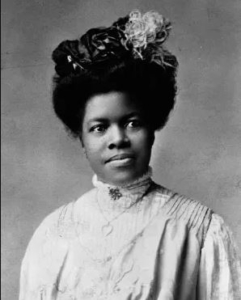
In more than 200 speeches she gave across the country, educator, feminist and suffragist Nannie Helen Burroughs stressed the importance of women’s self-reliance and economic freedom. A member of National Association of Colored Women, the National Association of Wage Earners and the Association for the Study of Negro Life and History, she saw voting as a crucial tool of empowerment, an extension of her lifetime commitment to educating African American women. One of her lasting achievements was to launch and run the National Training School for Women and Girls in Washington, D.C.
Burroughs also spoke of the need to address the lynching of Black Americans throughout the country. “The most important question that Black activists were concerned with from 1916 to 1920—the years before the 19th Amendment—were lynching and white mob violence against Black people,” says Jenkins. Because of that, activists like Burroughs, Terrell and Wells saw the right to vote as a tool to create laws and protections for African Americans throughout the country.
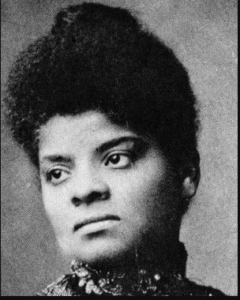
Ida B. Wells (1862–1931)
In addition to being one of the most prominent anti-lynching activists and respected journalists of the early 20th century—she owned two newspapers—Ida B. Wells was also a strident supporter of women’s voting rights. In 1913, Wells, one of the founders of the National Association for the Advancement of Colored People, co-founded the Alpha Suffrage Club, Chicago’s first African American suffrage organization. The club was notable for its focus on educating Black women about civics and its advocacy for the election of Black political officials.
But Wells and her peers often faced racism from the larger suffrage movement. When she and other Black suffragists tried to join a national suffrage march in Washington, D.C., in 1913, movement leader Alice Paul instructed them to walk at the back end of the crowd.
Wells refused. “Either I go with you or not at all,” she told organizers. “I am not taking this stand because I personally wish for recognition. I am doing it for the future benefit of my whole race.”


In conjunction with Black History month, there is an art show hosted by Arts Alliance of Stratford in the Gallery @ Sterling House. It’s called “Through our Eyes: a celebration of local black artists.” The show runs through February 18, culminating with an artists’ talk from 6:30-8:30.