

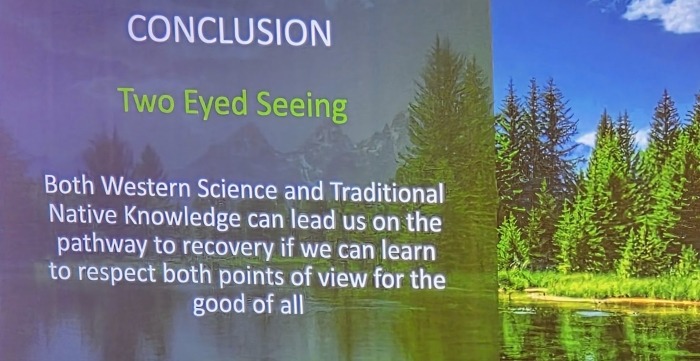
The Stratford Historical Society celebrated Native American Heritage Month by presenting a program, Etuaptmumk: Two-Eyed Seeing in Our Daily Lives, with The Institute for American Indian Studies (IAIS), in Washington, CT.
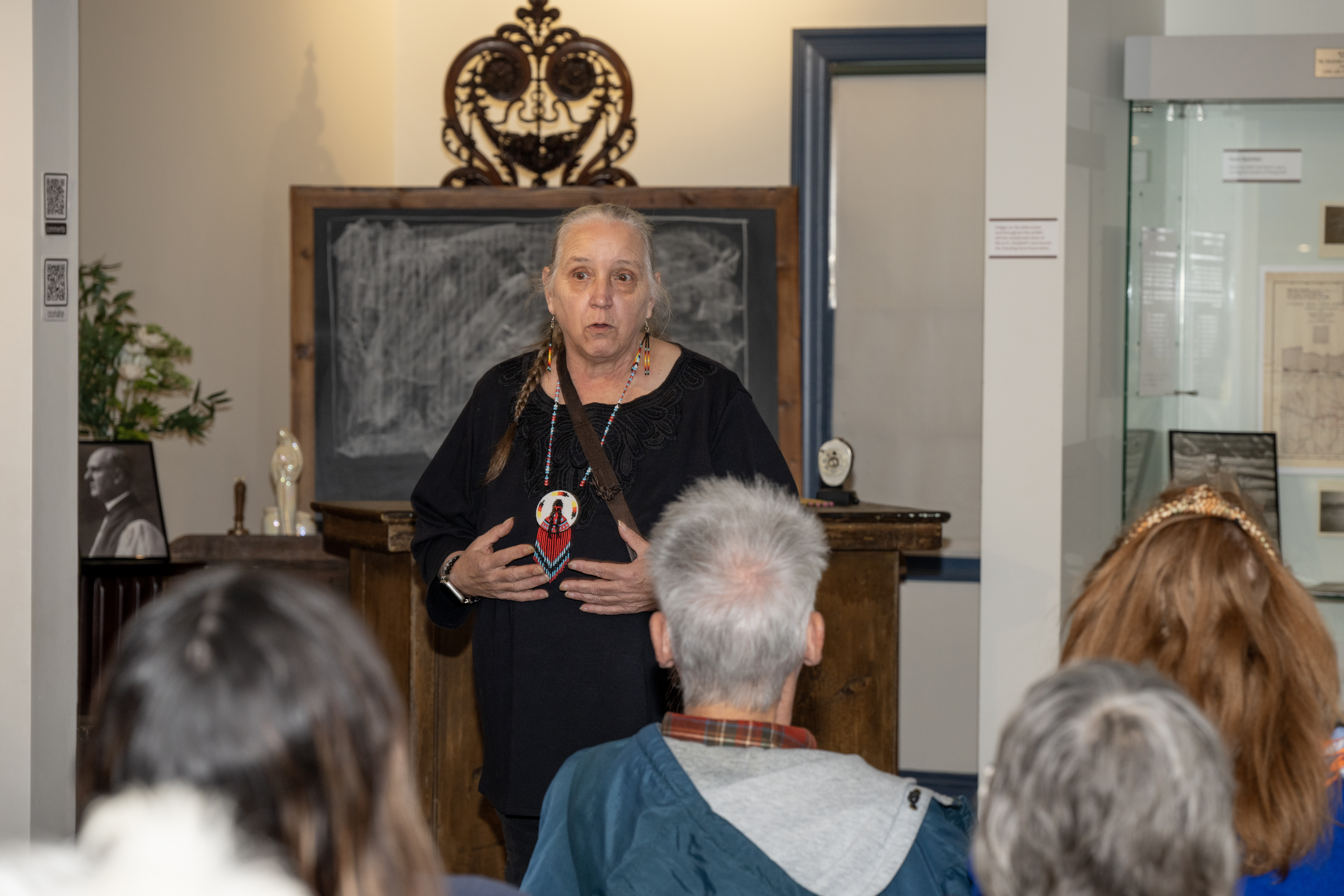
Darlene Kascak, of the Schaghticoke Tribal Nation, Education Director and Storyteller at IAIS, captivated the audience by relating Western vs Indigenous views in nature. She noted that Western peoples view the world as commodity-based – Wants vs Needs.
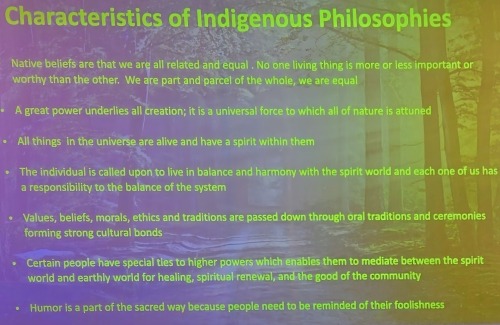
In Kascak’s words, Native American culture is based on gratitude and respect, and living a life based on three basic needs:
- Only take what you need
- Work and learn from each other
- View nature and the land as a gift
She shared multiple personal experiences that reinforced these basic needs.
Kascak, who collaborates with Robin Kimmerer, a Potawatomi botanist, and Susan Scherf, IAIS Educator and Ecologist, asked us to use all of our senses to develop insights into the relationship between nature and everyday existence. Their belief is that by using all of our senses, we can perceive nature not as an object to be used, but as a living community of relatives. Their approach encourages us to recognize a shift in perspective to one of gratitude, reciprocity, and interconnectedness, and seeing the intelligence and wisdom within plants, animals, and other natural elements.
In Algonquin there is no word for “own”, according to Kascak.
Also on display were Native American baskets, likely from the local Golden Hill Paugussett Nation, and a book, Red Road: Traditional Voices of Afro-Indigenous America by current Clan Mother, Shoran Waupatukuay Piper.

Etuaptmumk: Two-Eyed Seeing in Our Daily Lives meshed seamlessly with the Stratford Historical Society exhibit, “Duty of Care: The Legacy of Indian Boarding Schools and the Question of Repatriation”.
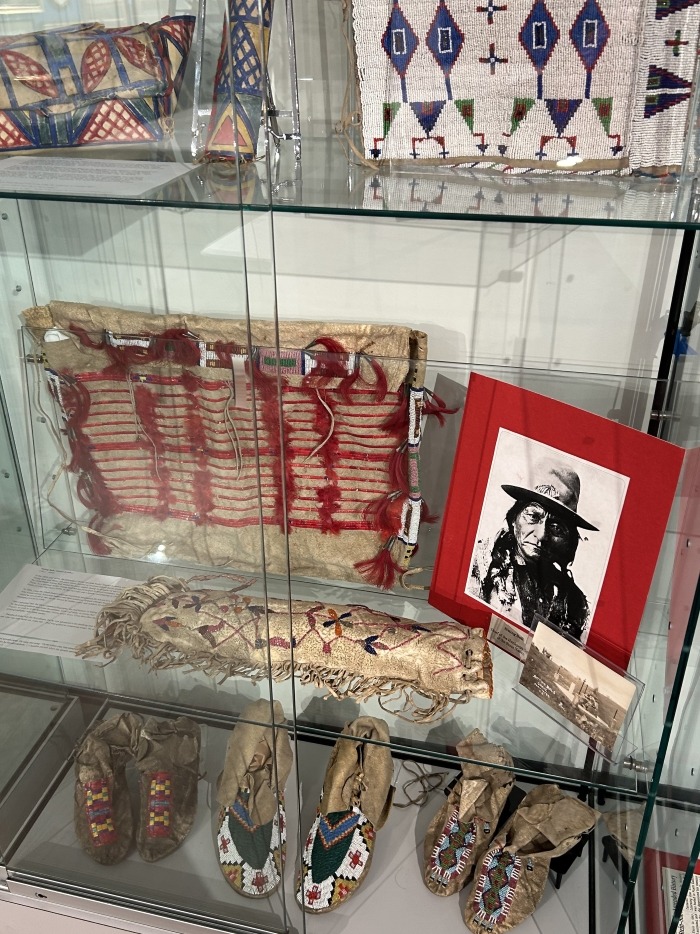
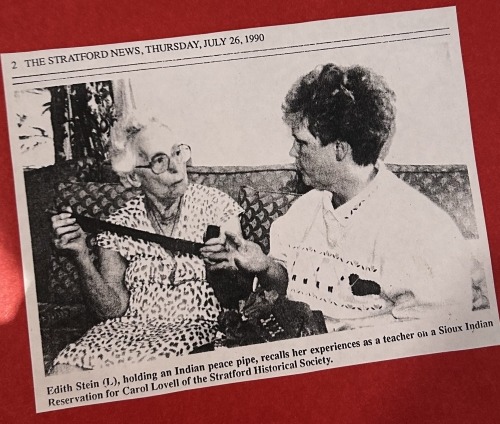
This special exhibit will be on display until January 1st during regular museum hours. On display are artifacts gifted to young Fairfield County teacher, Edith Hull Stein, while she taught at the St. Elizabeth Boarding School for Indian Children on the Standing Rock Reservation, in South Dakota.
She taught there for several years in the 1920s, before falling ill and returning home. Edith’s instruction books, letters, photographs, and classroom furniture, give a window into the conditions, hardships, and relationship dynamics of reservation life in the 1920s.
During her time at St. Elizabeth’s Boarding School, Hull was gifted with heirlooms purported to have belonged to Hunkpapa Lakota leader Sitting Bull. You will be able to view an Intricately beaded saddlebag, painted parfleche storage box, knife case, and moccasins.
These items are on display while being researched by the SHS for repatriation.
This exhibit raises questions, a century later, about the Stratford Historical Society’s responsibility to care for and, when appropriate, repatriate items of cultural significance.