


By Jim Cameron
President
CAMERON COMMUNICATIONS INC
Author: “Off The Record: Confessions of a Media Consultant”
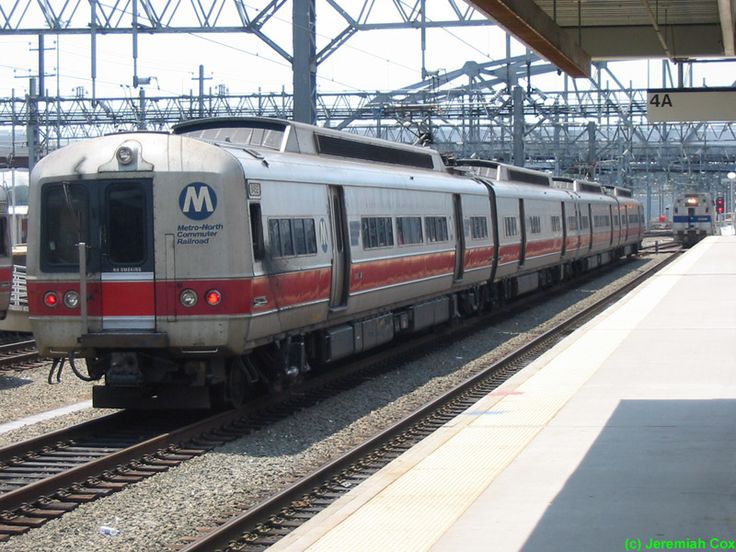
We take our train service for granted. For the 80,000 daily Connecticut riders on Metro-North the service is dependable and on-time… usually. But not last Thursday evening (June 5th), the hottest day of the year (so far), when the overhead catenary power lines were dragged down near Westport. No power means no trains.
What caused the problem won’t be known for a while. Given the heat, it might be “wire sag”. Or maybe it was a worn out pantograph carbon shoe (the thing on top of the train that touches the catenary power line). Whatever the cause, the results were fast and long-lasting.

Scores of trains were delayed throughout the Northeast Corridor, both on Metro-North and Amtrak. But two were stranded between stations with no power… and no AC. One, an Amtrak train carrying 400 people, got very hot. Because the windows don’t open, people started to get upset according to media reports.
Metro-North trains have long carried emergency water supplies for such incidents, but not Amtrak trains.
Eventually diesel trains came to the rescue (along with local fire fighters), but the delays were far from over… lingering into Friday’s service the next day.
How did passengers on the delayed and rerouted trains make out? Based on interviews, pretty well given the circumstances and Metro-North’s quick response.
Substitute buses are usually the answer, but at the peak of rush hour (when the incident occurred) most buses were already on their regular runs. It’s not like there’s a fleet of spare buses on standby. And remember… a full Metro-North train can carry 1000 passengers. A bus, maybe 60 (including standees).
A reporter friend of mine who lives in eastern Connecticut grabbed the 5:22 pm train from Grand Central to New Haven and, within minutes of departure, the hundreds of passengers onboard were warned of problems: the train would terminate at South Norwalk.
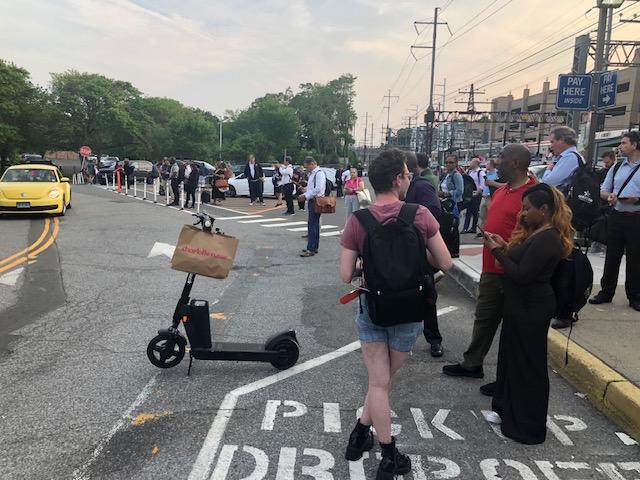
There he caught a bus, only to be dumped somewhere in East Norwalk when the driver pulled to a stop and said “I’m done working, everybody off. There’s another bus coming.”
“None of us knew where we were,” said my friend, eventually paying $120 for a cab to West Haven where he’d parked his car. He eventually got home about 11:45 pm.
“Everybody was pretty ‘chill’ and patient,” he said, impressed that Metro-North staffers wearing distinctive vests were at the stations directing the throngs. “I’m just glad that Metro-North was doing something,” he said. “The whole experience taught us just how vulnerable we are when things go wrong.”
Another colleague, Paul Murnane from WINS, caught an 8:00 pm train from GCT, getting no further than Greens Farms, where the platform was jammed with tired travelers. Sure enough, vested railroad staffers directed the throngs down a hill to three waiting buses which immediately filled up and departed. More buses were promised and quickly arrived. Murnane’s bus even got a State Police escort, arriving in Fairfield at 11:30 pm.
Again, he says the crowds were patient and well behaved. “It’s hard to have a riot in Vineyard Vines,” he said, commenting on the riders’ summer attire. A 40-year rider of these rails, he too was impressed with the railroad’s response.
Stuff happens on a railroad depending on aging infrastructure. So if you’re taking a train, always have a “plan B”. And BYO water.
And kudos to Metro-North for their handling of this situation, especially for keeping passengers informed.
Jim Cameron is founder of the Commuter Action Group and advocates for Connecticut rail riders. His weekly column “Talking Transportation” is archived here. You can contact Jim at CommuterActionGroup@gmail.com.


