


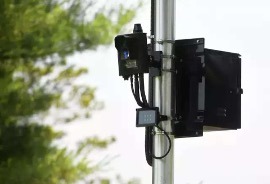
Across the town of Stratford, authorities have made significant movements to protect the safety of students crossing the streets, and attempts to gain drivers respect for the speed limit in school zones with signs posted in the area before arriving near a school zone. With the authorization of the Office of State Traffic Administration (OSTA), the town was able to proceed with its implementation of the Automated Traffic Enforcement Safety Device Program (ATESD).
This initiative uses high-resolution digital photo and video enforcement systems, cameras that are integrated with radar speed detection to capture vehicles that exceed the limit of 10 miles per hour or fail to stop when there is a red signal. They capture the plate number, date, time, and location of a motor vehicle that violates the street speed limit. These cameras all operate 24 hours a day, 7 days a week. During its 30-day warning period, when it was first initiated on May 27, 2026, any speeding motorists detected by the cameras were sent a warning by mail.
However, the 30-day warning period officially ended its grace period on July 2nd, 2026. This means that motorists now will receive a $50 citation as a first warning, and if there is any violation detected in the one year following that, it will result in a $75 citation.
The owner of the vehicle will be notified by mail with information on how the individual can pay, and view images of the violation. Motorists also have the ability to challenge the citation by visiting viewcitation.com or calling the Citations Processing Center to schedule an administrative review with the Town of Stratford Police Department.
The Stratford Police Department states on their Instagram that this program is “designed to enhance safety within school zones by discouraging excessive speeding and increasing driver awareness in areas where students, parents, crossing guards, and school staff are most active.”
The Stratford Police Department has enforced this program in both the northbound and southbound lanes of these locations:
- Huntington Road at Bulldog Boulevard
- Nichols Avenue:
- Northbound at Wood Avenue
- Northbound at Kenyon Road
- Southbound Avenue at Barbara Lane
- Southbound at Grace Lane
There appears to be a mix of reactions from Stratford residents about the recent installation of cameras. This is observed in a Facebook community group known as the ‘Town of Stratford, CT’. To be clear, that it is not the official page of the town, but rather a page to highlight the best of Stratford and share what the town has to offer.
In a post by Nicholas James on August 12, 2026, he talked about ‘More Traffic Cameras For Stratford Incoming’,based on the 5-year red light and speed enforcement contract and its value being up to $6.7 million. This sparked a comment thread among a few of those who are members of the page.
A community member who goes by the name Joe Baron commented, opposing the installation of the traffic cameras, saying that “…everyone is used to driving 40 in a 30 zone IF conditions allow. That being said, I don’t see an abundance of cars recklessly flying through red lights.” He views the cameras as unnecessary and calls for these cameras to get removed, ending with ‘Get these cameras out of here!’. This comment received 14 likes, with many other users agreeing with Baron’s take on the situation.
On the other hand, there are other users, such as Marca Leigh, who counter his take. She replied to Baron’s comment, stating that she has observed many drivers blow stop signs, run red lights, and turn when the street signs indicate not to. Leigh says there is a good reason why residential areas stay at a driving speed of 25-30mph, giving a hypothetical situation that ‘If a child or pet unexpectedly runs into the road, slamming your brakes at 40 mph vs 30 is a huge difference.’
While public agreement remains split on whether these cameras serve the better good or represent an unnecessary surveillance, it can be said that the success of the program will heavily rely on the trust of the community towards it. These next 5 years will determine how effective the speed cameras are and if they provide a long term solution for neighborhood traffic safety.


