

Stratford Crier
By David Chess, Executive Director for Stratford Forward and Stratford Crier
Michael Suntag, C.A.R.E. Chairman
Barbara Heimlich, Editor, Stratford Crier
Transcript
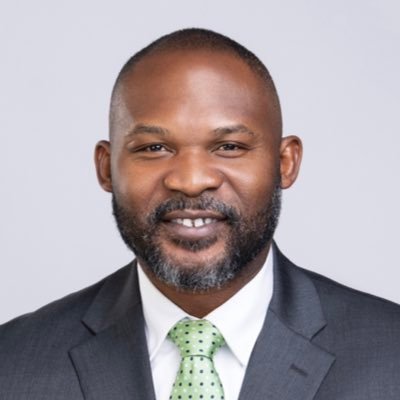
Dr. Osunde: Thank you all for inviting me to talk about the work of public education. It is so important these days and obviously, Stratford as a Community, as a school system, holds a dear place in my heart. But I did want to just make a disclaimer statement that you know whatever is discussed here today truly is about my insights, my expertise around the work and it’s purely my opinions, my comments, and my perspectives. It should not be construed as that of others, particularly the school.
Mike Suntag: Dr. Osunde, thank you, it’s good to see you again. I’ve done some work with you over the last couple of years that you’ve been the Stratford superintendent so I have some insight into what your vision is, but I think for everybody who’s going to watch this I think it would be great to find out more about what that vision is and since we haven’t had much of a chance to see you for a while I think this is an opportunity to talk about that vision that you had for Stratford when you came in, but you came into Stratford after Stratford went through some turmoil and it will be very interesting for people to hear what you have to say about how you entered and what you were thinking about your strategy so let me ask you our first question.
Mike Suntag: What is your vision for a healthy school system and what are the critical ingredients, if you can be as specific as you can be.
Dr. Osunde: It’s interesting though because of the technical expertise. I do have a very technical version of a vision for how I envision this academic enterprise kind of playing out. But what I’ll do is I’ll touch on some of the essential elements.
You know when I first got to Stratford I had a chance to sit down through my entry plan with a host of people, you know some remarkable people, some remarkable voices, and I always kind of tell folks that after the first about 90 seconds of the nineties, you know everybody starts to unload on you some of the things that need to get fixed, corrected, but it was good to hear those insights because I think what also came with those insights were ideas right? And I vividly recall my first town hall meeting and one of the key themes that came out of that conversation with Community was this idea of unity, a Community coming together, that for some time Stratford had felt fragmented so for me it was really about using that as a foundation to create the space where you can bring voices from the north end and the south end of town into the same space and say, “where do we want to go?” and some of the key elements that emerged for me were really just tum a school system and a school Community that’s anchored on integrity and dignity. You know ensuring that every kid and staff and family members who access our schools come there they are respected, they feel included, they feel safe, and that was particularly hard to do in the peak of the pandemic.
If you all remember that far back, executive orders, people were on edge because at any moment the global dynamics could shift. So creating a space where integrity around the work is substantiated, and then the dignity of people are consistently reinforced.
The next level of my conceptual Vision I would say had to do with modern facilities, and I was fortunate that when I got to Stratford we had some of the best facilities in the area, Vicki Soto school was essentially still new, and it was beautiful, and then Stratford High was really the standard in the area. You know we’ve got some work to do in that area, but now need some TLC.
Brian Snider has been very supportive in that sense, but we want to make sure that our kids have some of the best spaces to learn in, our teachers have the best places to teach, beyond that we know that the work that’s in front of us is complex, and we have in my opinion, my humble and honest opinion, some of the hardest working teachers in all of the state right here in Stratford. But that’s not enough we have to be able to be positioned to put the resources in their hands to do the work and use their expertise in creative ways to really teach and deliver instruction to their kids so these are some elements that I’m kind of just going through and I’ll tie this all together at the end.
For quite some time there’s been a conversation about the state of the curriculum in our school system, and oftentimes the way teachers really kind of get the opportunity to dive deeply into their expertise is if they have a strong and viable curriculum, a curriculum that is culturally responsive. Because Stratford as a Community, and specifically our school system, has gone through incredible transformation in its composition, how it looks, so curriculum that’s responsive to that and then also curriculum that positions our kids to acquire the skills and competencies that when they leave Stratford they’re going on into the world ready to take on the world and we’re proud of the product that we’re sending out to the world, whether it’s college or industry.
For those of you who’ve been around the Community for a long time you know this, it’s a Community with some very potent Pride. We’re proud about who we were, who we are. Where we have the capacity to be next is strong.
Partnerships, the whole concept of it takes a village of education works in Connecticut. That is the foundation, and organizations such as C.A.R.E. and Community partnerships across the way, from PAL with the police department, to Sterling House, to the South End Community Center, Rotary, every organization that has had a contribution in hand. We need in a consistent and sustained manner keep those folks involved, and then ultimately when we talk about being proud about what we do, our product is putting out kids who are fully competent and who were fully ready. So we always talk about making sure that our kids in Stratford are performing better than their peers you know in Milford, or Shelton or New Jersey or New York State, what have you. We want to make sure that our kids have demonstrated to us in a rigorous space that they have met the standards and because when they do that we have more confidence that as they step out into this unforgiving world that to have the resiliency and fortitude to thrive
Mike Suntag: You were handed a difficult situation the first year you were here, when we were identified as an Alliance District. That was not of your doing but you had to deal with it. How did we get there? How did we get into the Alliance District? And what exactly is the Alliance District?
Dr. Osunde: I’m goanna rewind a little bit on that situation, Michael, perhaps an understatement. I started in July and in my first two weeks preceding opening the school we had some serious challenges. We had a boiler at Second Hill Lane that blew up, it was a brand new boiler. There was a hurricane that weekend so the entire basement was flooded, luckily we had the support of the town that came in, did some good things. We had unfortunately one of our nurses at Franklin Elementary School lose her life in a tragic accident; we had a student who experienced the same thing.
Those are all in the first weeks of school. So I walk in and I said oh my goodness what is happening? But we have a very cohesive Community we came together to support each other through those processes, and then five months after I started the work, I got a phone call from the State Department of Education, “by the way, you guys are an underperforming school system.”
Wait a second, I just started and I said, “I haven’t been here long enough to screw up.” So I asked those important questions and State officials informed me that they’ve been monitoring things for some time and that designation was based on pre-pandemic numbers and I reflected on the situation.
I said okay, well, this is an opportunity we can either come together and find ways to design things that will allow us to improve, or we can accept the status quo. The status quo for me, on a personal level, was not acceptable. I had this conversation with my team, with at that time Board of Education leaders, and some Town officials as well.
But the Community was very confused about what their Alliance designation was. We realized, and we communicated, but it’s such a technical diagnostic that it sometimes goes over the heads of people. Essentially, what the Alliance District is, the easiest way to perhaps illustrate this is to say, you look at different states and they have different ways to assess the overall functioning of their school systems. Some states in the South have like a report card, they give schools grades from A through F, and F is a failing school system, a D is a school system that’s near failing and inherently we want to inch closer to that.
A rate for us here in Connecticut, the process that the State Department of Education uses, is considered an accountability indicator system, and what it is -12 indicators that the state has highlighted that assesses the overall functioning of schools and I.E the output of what they do I.E the preparedness for the kids once they leave the school system.
Now historically school systems, particularly larger Urban school systems, but really school systems all over across the continuum, there’s been kids who fallen through the cracks, so the system is not always fair to everybody, and, the State of Connecticut came up with these indicators, about 12 or so indicators, that they’re saying that if every school is meeting a certain threshold or a certain standard around these indicators, then the children of Connecticut should be entering into society prepared to be contributing members, whether they decide to pursue a post-secondary opportunity, at a very fundamental level.
The Alliance accountability indicated measures how kids perform in reading, in math, and for those of you who are old enough, you know Reading Writing Arithmetic from back in the day. But it also includes a host of other indicators, a science indicator, now with the Next Generation science standards, postsecondary transitions, chronic absenteeism, which was a point of improvement for us last year.
We put some plans in and I’ve had a chance to follow some of the board meetings, and I understand that the number we had last year was close to 28% and I believe we aimed to get to about 14%. We put together a plan, and Von Temple was instrumental on that when she was there, and our target call was 14%, slicing by half. I was ambitious, and I asked the team if we can get to 11%. But the ability to cut that in half would have been a significant milestone. My understanding is that the district ended up at 19%, so that certainly is progress in the right direction for chronic absenteeism.
One task is in postsecondary transitions. Graduation rates are among some of those, but what the accountability indicators also do is they take it and they layer it and they say, okay it’s one thing to service the whole school but what are you doing for quote unquote “a population of students who face hardship”. So you’re talking about kids with IEPs, talking about kids who are second language learners, and you’re talking about kids who are socio economically disadvantaged or quote unquote “poor kids”, because those cases would typically fall through the cracks and when you take a look at those indicators, those metrics, those often times are kids of color. So with that designation the state also now says, okay you know what this is probably not a favorable label but you’re not on an island by yourself. Here is an infusion of financial resources. What we want you to do is find innovative ways to improve the outcomes for your children in your school system, and they give you a state liaison who checks in on you on a regular basis, at minimum quarterly, and they want to see you do something different because whatever practices you’ve had in place has clearly not been working.
That’s the general premise behind the Alliance Grant. The other piece now is that there’s language in the Alliance program that forbids school systems from supplanting, which essentially says, “okay we are going to infuse you with some financial resources but this doesn’t mean that you can cut out of your general budget and replace it”, because essentially you’re just doing the same old thing and that’s been a point of conversation for us in Stratford over the last couple of years. But that’s the general premise. Now what’s unique about our work, and feel free to jump in at any time if you want me to expand on any topic or point, is the plan that we put in place was perhaps the sole foundation of our growth in 2022 23, and when I say incredible growth I mean incredible growth and I I’ll talk a little bit more about that as we continue and move along.
Do you have any other questions? Is that clear? Is there anything you want to clarify on that?
Mike Suntag: That’s about as clear definition as I’ve heard up to this point so thank you for that because there has been a lot of controversy over that designation and what it means and how we’ve proceeded with it absolutely.
Let me ask you this, what would you, why would you say, it was controversial for our Community?
Dr. Osunde: It was controversial because of the misunderstanding of what it pertained to the designation of, nobody said it like that, but the designation of being a failed school system was a heavy thing to tolerate by people who really didn’t understand all of the comprehensiveness of what it meant. So just having that cloud over the school system hung very heavy on the on the Community and although I remember communications being very specific and defined it didn’t mean that the perceptions were going to change over that overnight. I agree and I think there’s power in words and one of the things that you’ve probably noticed over the last three years as I’ve talked about this, and keep in mind this is my expertise. You know every school system that I have been privileged to work in has been a member of the Alliance program from the State Department of Education.
We’ve done some good things in the past but you know I do make that distinction between Stratford and perhaps the other Alliance districts because I think the word failing is a hard and harsh word. What we were is an underperforming school system, meaning that we have capability to be that much better and truthfully we were the last District. There’s 36 districts, we were right at that, we were at 36, and that’s why I felt that it was an opportunity cohese together and say that if we were that close then if we have the right processes, systems, and ideologies in place, in a few years we should be able to catapult out of that designation right, and we started to see some signs of that in 2223. I would have to take a look and see what the performance looks like this year, and I think that’s something that Community members can perhaps FOIA or inquire about. I do know as a general practice at the September board meeting for the last couple of years we’ve always done a student performance presentation so my suspicion is that that will happen again this year and I’m looking forward to hearing how our kids did.
Mike Suntag: Thank you. I know this is not a fair question, how do we fix it? I know it takes a comprehensive Community and holistic look at all of this, but how do we go about fixing it?
Dr. Osunde: Yeah, you and I can grab a cup of coffee and spend hours. You’ve shared some wisdom with me, there’s two sides to this okay, schools are oftentimes a microorganism of the larger Community. There is massive technical work that needs to be done, and within the school system as a whole keep in mind we have 13 buildings, 14 buildings you include the district office. We have north of 7,000 kids like 7,400 kids, you know maybe 400 of them are in magnet schools, and roughly 1100, for you 1200 employees. So I’ll put this disclaimer out there, fixing does not happen overnight. When you talk about transforming a school system it could take years. When I say years, it could take significant amount of years.
I do believe we started to see movement in the right direction, and in my humble opinion I’ve shared this with some folks who are close to the work, in the past my previous board chair and executive chair, and actually really the full board, and I think I’ve actually mentioned some things to you in the past. I didn’t think it was going to take too long with the right processes and systems in place, I thought three to four years. By year four we would have had some things that we have been really proud of. As a matter of fact the results that we saw in year two, but in my opinion was premature. I didn’t think we’re going to see those results until year three, so you can imagine how inspired we were that the work of our teachers were really generating results, and I think that’s something that they hadn’t felt in a long time. You know I remember having a conversation at the end of the year with Mike (Fiorello), president of SEA (Stratford Education Association) and I’m like Mike this is remarkable work, this is remarkable outcomes, you know this doesn’t just happen overnight alone on the heels of a pandemic where so much learning loss happen. For example our SAT scores jumped up by 31 to 30, 31 to 32 points, and our AP scores went up by four or five%.
And then if you take a look at our elementary schools about half it was scattered data, but about half of our elementary schools really kind of showed some really good growth in that some of them were kind of static, so we had some work to do there. The lynchpin in this process is our middle schools, and for those of you who’ve been in education for quite some time Middle School is always the final key developmental level. I’ve always said if we’re able to figure out, and there’s a host of factors that go into this, this is not a finger point, I think it’s just the developmental level and also the nature of middle school. I was a middle school assistant principal for three years and I said quickly “I got to get back to the to the high school level.”
But how do we fix it? You know the technical side of things, but it starts at the leadership level. It 100% starts at the leadership level. If there isn’t an alignment in the vision for where they want to take the district, and by that I mean the board level, if there isn’t an alignment or consensus on the direction of the district, it’s hard to implement things at the ground floor which is in large part the superintendents responsibility.
But when I say leadership level I’m going to broaden that horizontally, I’m talking about Town Council in the mayor’s office. If K-12 education is not recognized or identified as a priority, then it’s hard to transform a school system. There’s no doubt about that, and when I say identified as priority it’s not simply just making an appropriation of a budgetary amount to the Board of Education. It’s we have to talk about it, we have to be about it, we have to move that conception as a Community because we all know that strong school systems are a good reflection of strong communities. So it’s that piece, and then obviously at the organizational level is making sure that there are strong and well-designed systems and processes for the efficient operation of the school system.
It’s an intentional and deliberate leadership behavior to make sure that behaviors and practices that don’t advance us towards our goals are eliminated from the organization. Sometimes practices like nepotism can hinder that right because it’s hard if there’s an nepotistic culture it’s hard to hold people accountable. You can’t have a tough conversation with a professional about improving the skills or doing something a certain kind of way and then be at a barbecue two days later having small talk with a Miller Lite in your hand. So it’s those processes, it’s those structures, it’s treating people fairly and then making sure that you really kind of channel all your resources towards what you guys by consensus identify your priorities.
I felt that we were doing that for a long time and I’m hopeful that since we’ve established those priorities we can continue to move in those directions. The point you made about systemic change being very difficult and the alignment that’s necessary to do that for a whole system is absolutely correct. We’ve had some successes with individual schools, but growing that to size for system changes that’s very complicated and difficult. And you started that process, and then you were pulled out of that process, what were we intending what were you intending? Where were you going to go with the system? Well that’s exactly it, it’s trying to make sure that the approach that we have hits on every school.
I spoke a little bit earlier about I think the most complex level is the Middle School level. One of the things that I think is noteworthy is, and I don’t know that we talk about it enough okay, Stratford High which has in some cases been regarded as you know the redheaded stepchild. Some of our performance outcomes in 2223, they hit across every metric. Every metric SAT through the roof, the Next Generation Science standards, through the roof, AP through the roof, physical fitness stark Improvement. To hit across every metric, and what that did for them is that allowed them to jump on the US News and World Report Best High Schools to 93.
We don’t talk about it enough. Obviously, Whitney is a perennial School of Distinction school. They just do a remarkable job there and as we look to improve our school system it’s taking a look at those aspects of our programming and outcomes that has historically lagged behind and I’m gonna, I haven’t publicly said this in the past okay, but I will say this now: some years ago we were in an administrative meeting, myself and our administrators, and Robert Cherry, a young administrator, and we were unpacking the science and some data work, and one of the things he said, it’s a famous quote, I think it was JFK, he said “rising tide lifts all boats”. And what we found in 2022-23 was that with all the Improvement that we saw, we saw our white kids improve but not dramatically, they were always outperforming their peers. Students of color we found that almost 100% of that growth that we saw in that year was with our high needs kids, it was our kids with IEPs, it was our kids with free lunch, it was our kids second language learners, it was essentially our black and brown kids and it moved the numbers in such a significant way and I think you know at the start of the year there was some conversations about what to do with the Alliance plan and so on and so forth, and my understanding is that a lot of that has been repealed or reconfigured and I would hate to see any kind of regression because when I recall my interview a few years back, when I came to Stratford researching the data our student population was somewhere around 65%, 64-65%. Today I think that number is at 75, 74 -75%, so in three years it’s a 10% increase in the racial diversity of our student population and they were improving.
They were improving what they were doing in the classroom. They were leaning into the work of our teachers, our teachers were working extra hard from a leadership standpoint. I would hate to see any kind of regression because, to your point Mike, I think we were moving in all the right directions and we have seen significant change as you have seen in that direction and I guess the difficult thing to do is when something like that happens how long does it take to reframe?
We know in education there are cycles like this. You build it up, it’s taken down, you build it up, some other things come in, some other leadership, and so forth. How long do you think it takes after something like this happens to rebuild? It takes a while, you have to have a skilled builder, and even then it takes time because there’s so much external and internal stressors. And to your point, there are some internal actors who are completely content with the status quo and when things are deconstructed not only does it take time to rebuild it, it also requires more resources, which becomes an added burden that unfortunately often times falls on the shoulders of taxpayers. Also it’s repealing things. In some regards, and you’ve been an educator, it’s a slap in the face of educators that they would lean into something, see some result and all of a sudden there’s a pivot and this notion of “this two shall pass” is something that makes us as educators cringe.
You want some level of sustainability particularly when you’re seeing results, but it will take a skilled leader, it would take a skilled leadership team, it would take a skilled board, an empathetic board that can again reach consensus on what is important not just for the school system but also how the school system impacts the Community at large. But it takes time as you’re looking at me right now it’s been some coincidence with seeing each other, but these grey hairs didn’t show up overnight. You know a couple years ago my hairline looked a lot [Music] richer contrary to some of the the narrative that’s out there. Those 70 hour weeks really kind of impact the progress and the advancement of the school system those things don’t happen overnight as I’m sure you know so in credit to you there aren’t that many people that choose to stick it out because it’s deep it’s muddy systems reform is very difficult and those who are not part of it really when you try to explain it glaze over they can’t really understand how how difficult the situation that is I know lots of my colleagues uh burned out I’m sure you found the same thing but it’s very stressful and it’s very hard to keep it going.
Mike Suntag: so credit to you to stick in there like this despite everything that’s going on in your life right now and in Stratford. Look we really appreciate the fact that you’ve came on and you’re voicing how you were thinking about all this. As I said before, it’s really good to see you, you look like you’re in good health and looks like you’re in good spirits which is great.
Do you have anything that you’d like to add to the comments you’ve already made?
Dr. Osunde: I’ll say this, it’s good to be back and seeing some friendly faces and talking about the work. This is my purpose, this is what I’ve done, and again I’ve been fortunate to do this at a couple different communities and really enjoy what I’m doing here in Stratford, what I’ve been doing in Stratford. We’ll see hopefully how things play out, but I gave you a very technical response to the vision for the district. Earlier when we started this conversation and simply put I just want Stratford to be one of the more dynamic places where kids come to learn and teachers want to work and we’ve seen some of those things play out. Based on the volume of applicants we’ve had, the quality and caliber of applicants that we’ve had, but also programming,
I remember saying this distinctly at either my first or my second time: I don’t care about our neighbors, I said I don’t care about Stamford, I don’t care about Milford, I don’t care about Shelton, I don’t care about Trumbull. Secretly in the back of my head I do right because that becomes standard, and I wouldn’t say that publicly in the town hall meeting but that becomes the standard, the level of success and reverence that people speak about when they speak about millions for public schools, or even Shelton that level. I feel that Stratford belongs squarely in there. If I’m being even more transparent my aspirational goals was to try to inch, and people don’t know this, but Trumbull is one of the highest performing school systems in the state, it’s not too far from us and they’ve done remarkable work there. I understand that Community factors are different in everyone in this Community, so on and so forth, and that’s why I’m saying I don’t want to be them. I think our DNA and Stratford is unique and we have to be able to celebrate that but I felt that we can with the right processes, systems and dispositions, and attitudes, we could inch into those conversations and maybe even push the threshold of that over the years. My fear though is that if there isn’t that consistent optimistic and can do attitude we can quickly descend into purgatory 100% and get stuck there for what could be decades.
I’ve talked about this with my executive team, I’ve talked about this to the board, and in my heart of hearts I know for a fact I’ve been in the space. We have the most resilient workforce, we have the most giving workforce, and we have, again I’m not saying this because I’m a superintendent, we have the most capable kids in the state. So it’s really about putting the pieces together linking one good day with the next, putting processes in place. So instrumental to some of our work was the supervisor for Equality, Inclusion, and Engagement. That position was critical. Most people don’t realize that was a data driven position that responded to some of those high needs pieces that you saw in the indicators, the leadership and accountability role. And then instrumental to our transformation was the director of District Safety and Presidency. Carlos Castro came to me with a bazillion ideas and “Like Carlos, I don’t have the funding for that but you know where we could we would do those things and in my opinion it’s been an incredible impact.” But some of those positions no longer exist. So, in the back of your head, as an executive as somebody whose expertise has turned around in the whole system’s Improvement, you worry that you might see some regression in different places. But we have good people. Systems improvement is anchored on people not things. If people stay together and keep their eye on a Northstar, which is always our kids, then I think we’re going to be resilient enough. It might be a little bit more of a struggle, but it’s not undoable.
We all appreciate your comments. I found that you have seated change while you’ve been here, and that tends to last in people who have internalized it, and they will carry on. It might look a little different than it did, but those people that you have actually impacted they tend to continue that process and that’s the hope I guess you know in the long run.
Mike Suntag: We all appreciate your comments. I found that you have seated change while you’ve been here, and that tends to last in people who have internalized it, and they will carry on. It might look a little different than it did, but those people that you have actually impacted, they tend to continue that process and that’s the hope I guess you know in the long run. Thank you so much Dr. Asunde for being with us today it’s very good to see you again and we wish you the best.
Dr. Osunde: My pleasure. Hoping to see you soon and give everybody my well wishes.
Editor’s Note: Following our interview with Dr. Osunde, he emailed us with the following:
“Thank you for the conversation today. It was both rich in content and enjoyable. I wanted to touch on one item I neglected to expand on. As I shared—beyond improved student performance—my vision includes identifying what sets us apart from our neighbors and makes us more attractive to families. For me, this is our richness in diversity and our academic and extracurricular programming. One example, which predates me, is the dual-language program.
To extend and build on these types of opportunities, and recognizing the community’s historical pain points around the ALPs/Magnet program, I began exploring the prospects of introducing an International Baccalaureate (IB) and a Junior Reserve Officers’ Training Corps (JROTC) to our district. Naturally, these initiatives would require support and funding from the Board/Town. These visionary programs offer opportunities to enrich our students’ educational experience— a desire of most families: a quality, rich, and safe education.


As a former NJROTC Cadet Lt, I support bringing this program to Stratford. Leadership. Mentorship. American History. Discipline. Community. Respect. With America250 around the corner & being a coastal community with the USCG, why wouldn’t we support this idea?
Osunde gets an A+ in talking a lot without saying anything.
And you get an A+ in being a dunce, not a critical thinker and a belligerent buffoon/keyboard warrior who can complain all day long yet offer no concrete solutions. Well done and clap for yourself.
Thank you Dr. Osunde, Michael Suntag and Dr. Chess. Very overwhelming but what is clear is that bringing our school system to the level that is needed to make the diverse population well prepared to lead productive lives after graduation is a very complex task. Dr. Osunde clearly understands this and also fully comprehends the enormity of the task and that accomplishing this will take time and the proper support. He was trying to make headway but was met with resistance from those who want to reduce the problem to a simple matter of cutting costs and and trimming programs. I hope Stratford will come to the realization that truly dealing with the needs of our young people has to be a priority for their success and for the success of our Community. Thank you, Dr.Osunde, for all you have done.
Vert interesting and thank you the CRIER. None of this gets into local media. I was present at a presentation about volunteers at Oronoque Village some time ago. I thought Dt Osunde was a man truly interested in the children and schools of Stratford.