


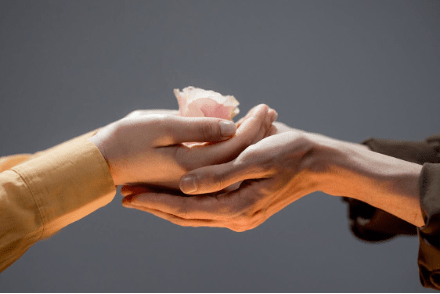
Kindness is viewed as a quality of being friendly, gentle, and considerate. A kind person tends to think of others first. They want to be helpful, offer something of value or solve a problem. They are empathetic and put themselves in another person’s place to try to understand that person. Kindness can also refer to a positive action or a good deed.
Many great philosophers, teachers, authors, spiritual leaders and celebrities have expressed their concept of kindness, how it uplifts and unites us. One scripture makes kindness a mandate. The prophet Micah wrote, “He has told you, mortal one, what is good; And what does the LORD require of you but to do justice, to love kindness, and to walk humbly with your God (Mic 6:8 NASB)?”
Ancient Greek storyteller, Aesop, understood the power of kindness in his fables, and would always have an accompanying moral to emphasize the point to the story. One of the most famous was about a lion and a mouse. This is how I remember the story. A lion was sleeping in the woods when a mouse ran by and bumped into the lion’s nose, which abruptly woke him up. The lion was so angry that he grabbed the mouse and was going to eat him. But the little mouse pleaded with the lion. The mouse promised the lion that if he let him go, he could be of help to him someday in the future. The lion was moved by the little mouse’s pleas and released him.
Later, the lion found himself trapped in a net that a hunter used to catch him. The little mouse heard the cries of the lion and valiantly chewed through the net which freed the lion. Then the lion realized that if he had eaten the mouse earlier, he would still be trapped in the net. The lion was very grateful to the mouse. The moral of the story is that “No act of kindness, no matter how small, is ever wasted.” The mouse showed courage in his kindness towards the lion who could have easily eaten him.
We are currently living in a society that does not always even acknowledge kindness. Our society has become more abrasive, combative, competitive, and predatory in many arenas. Our local and national politics seem to thrive on division. When the disparity of opportunity and wealth is noticed, it creates much resentment from those who already feel marginalized and downtrodden. Special interest and extremist groups seem to pit people against one another through social media posts that feed on fear. They create narratives of danger and criminality for some of the most vulnerable groups – perceptions which are not only unkind, but harmful. Some may say that these types of attitudes have also been around since the beginning of time and that today’s events are no different than other bleak and sobering times in history. However, ordinary people fought injustice, cruelty and hate with kindness. History has recorded such times of kindness and compassion during wars, famines, disease outbreaks, and natural disasters. Stories ranging from Harriet Tubman and the Underground Railroad to Oskar Shindler’s protection of the Jews in his factories to Mother Teresa’s work in Calcutta, to the kindness of people opening their buildings to help the survivors of 911 after the Twin Towers collapsed.
Where is kindness learned?
A quick AI search would say “from positive experiences at home, at school, from volunteering or community service, personal growth, and positive role models.” Some people have parents who intentionally teach their children by taking their families to volunteer to feed the homeless during holidays or participate in charitable causes periodically. Other parents notice that their children want to help others and encourage their kindness as they learn how to show it appropriately.
Many of us have learned about kindness from our life experiences.
We remember a moment when we were treated with generosity, care and compassion that went far beyond fairness. Do you remember how that felt? What thoughts or actions did that inspire?
I can think of one when I was working at a Burger King at the register. I was a shy and nervous teenager who preferred working in the kitchen because there I wasn’t out in public, dealing with often unpleasant people. One afternoon, we were flooded with customers. I was assembling orders as quickly as possible, and one man told me that his sandwich was cold. He was barely civil, and his tone indicated much displeasure. I put the sandwich in the microwave and returned it to him as quickly as possible. Then the next customer approached me, he was an elderly gentleman with a kind face and a kind tone. He said, “I want to tell you that you are so good with people.” I froze. Was he being sarcastic? Why would this stranger be so nice to me? He kept smiling in a gentle way and I finally responded, “Thank you.” Then I snapped back to business and said, “May I take your order?” I tried to be as careful with his food as possible so he wouldn’t change his mind about me.
Another time, my husband and I experienced the kindness of a young couple at a restaurant. We both approached the door, and they held it open for us. When we approached the host, we deferred to them to be seated first because they arrived before us. They insisted that we go first. So, we accepted their courtesy and thanked them. Later, we were ready to leave and asked for the bill. The floor manager said, “The young couple paid for it.” We were stunned and grateful and wanted to thank them, but they were gone. We felt so profoundly blessed by these kids who didn’t know us but showed such profound generosity. They didn’t have to do that. The floor manager encouraged us to “Just pass it on.”
Kindness is not often easy, but it can be done. Samuel Johnson wrote, “Kindness is in our power, even when fondness is not.” It is easier than you think. Help someone out while you are standing in a checkout line at a store or a café. If the person in front of you is short a nickel and you can spare it, why not help them? Hold a door for someone whose hands are full. Say something nice. Offer helpful words. You will be surprised the impact kindness will have on you as the helper, and on the recipient who will also want to be more kind. Anyone can be kind, but they must practice this virtue. Learn to see the moments where kindness can help. Don’t be afraid of how others react to your kindness. In a world where you can be anything, you have the courage to be kind.

