


As a vascular neurologist, I see every day how devastating a stroke can be and how powerful the right treatment is when it’s delivered quickly. That’s why becoming a Thrombectomy Capable Stroke Center is such an important designation for Bridgeport Hospital and our community. For patients, it can mean the difference between lifelong disability and a chance for meaningful recovery.
A Thrombectomy Capable Stroke Center (called a TSC) is a hospital that has met strict national standards, through the American Heart and Stroke Association and the Joint Commission, to perform mechanical thrombectomy, an advanced stroke procedure that removes large clots from blood vessels in the brain. This certification shows that our hospital is equipped with advanced technology, expert teams and proven systems to deliver top-level stroke care when it matters most.
What does this mean for stroke patients? Simply put, it raises the bar. With this designation, people who come to our hospital with a stroke have access to the most effective, evidence-based treatments available today, delivered safely and quickly by a highly specialized team. We provide the most rapid assessment, diagnosis and treatment delivered by a specialized team to provide the most up-to-date, advanced stroke care. That translates into better safety, better outcomes and a more reassuring experience for patients and families during an incredibly frightening time.
Speed is everything in stroke care. We say, “Time is Brain.” When a stroke happens, blood flow to the brain is suddenly blocked or interrupted. Without oxygen and nutrients, brain cells begin to die almost immediately. In fact, every minute a stroke goes untreated, the brain can lose nearly two million neurons. Acting fast allows us to deliver the most time-sensitive treatments, such as clot-busting medication (Tenecteplase or TNK) and mechanical thrombectomy that can save brain tissue, preserve abilities like speech and movement, and even save lives.
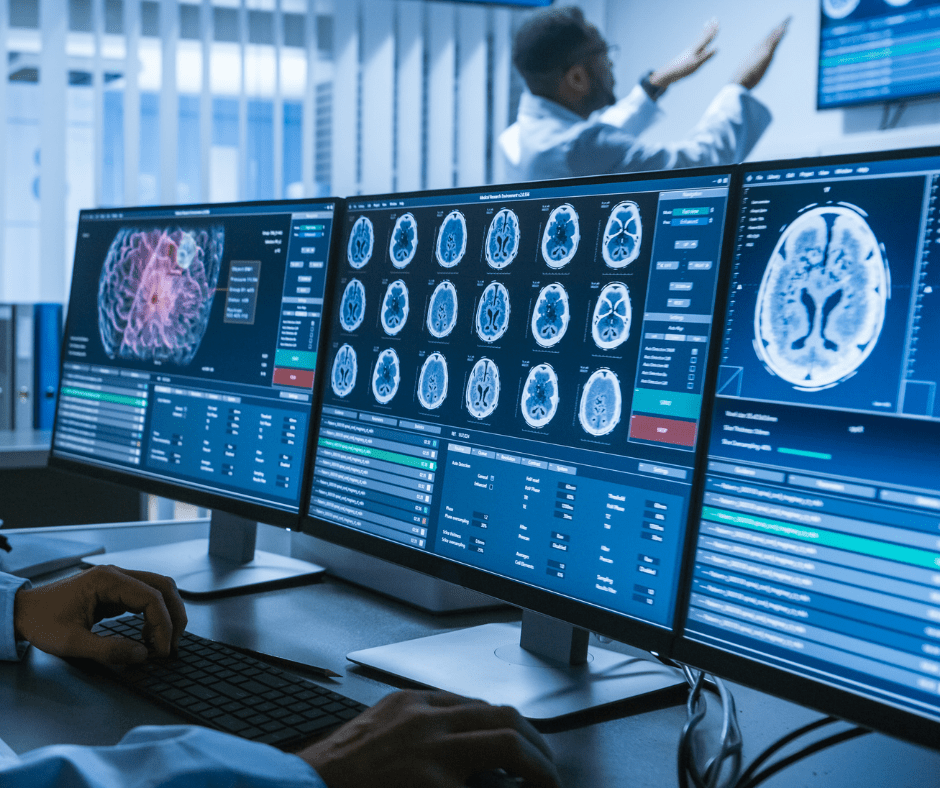
When a patient arrives at Bridgeport Hospital with stroke symptoms, things move quickly. The patient is met right away by our dedicated stroke team and taken directly to a CT scan, often within minutes. This imaging tells us what type of stroke is happening and whether there is bleeding or a blocked vessel. Our neurologists immediately review the images and examine the patient to determine the safest and most effective treatment, which may include medication and/or a thrombectomy procedure.
Thrombectomy can be life-changing for patients with large vessel occlusion strokes, which are some of the most severe and dangerous types. By physically removing the clot and restoring blood flow, we can dramatically reduce disability, improve the chances of walking and talking again and increase survival.
It’s also important to note, recognizing stroke symptoms early saves lives. Remember BE FAST: sudden problems with Balance, Eyes (loss or blurry vision), Face (facial droop), Arms (weakness in arms or legs) or Speech (slurred or incomprehensible) mean it’s Time to call 911 right away. Don’t wait. When it comes to stroke, every second truly matters.
Gary L. Bernardini, MD, PhD is chief of Neurology and director of the Stroke Center at Bridgeport Hospital. He also is a professor of Neurology at Yale School of Medicine.


