


The initial organizing meeting of the Stratford Women’s Equal Suffrage Association was held at the home of Rosamunda Winton on King Street, July 19, 1912. Her home was located where the gymnasium of Stratford High School stands today. Supporters of Women’s Suffrage from all over the state, including long-time Connecticut Women’s Suffrage President, Katharine Houghton Hepburn, actress Katharine Hepburn’s mother, were in attendance. This initial meeting “proved beyond all question that Stratford is the banner town in the state in its advocacy of equal franchise”.
Stratford men overwhelmingly supported equal suffrage for women. At this July organizing meeting, “an amusing remark by an old horseman, who was present, was a fair indication of the sentiment among the conservative men present. This old stager of the track said ‘I never bet very heavy on wimmin’s rights but I tell you these wimmin are thoroughbreds. I’m going to sign up for them.’”
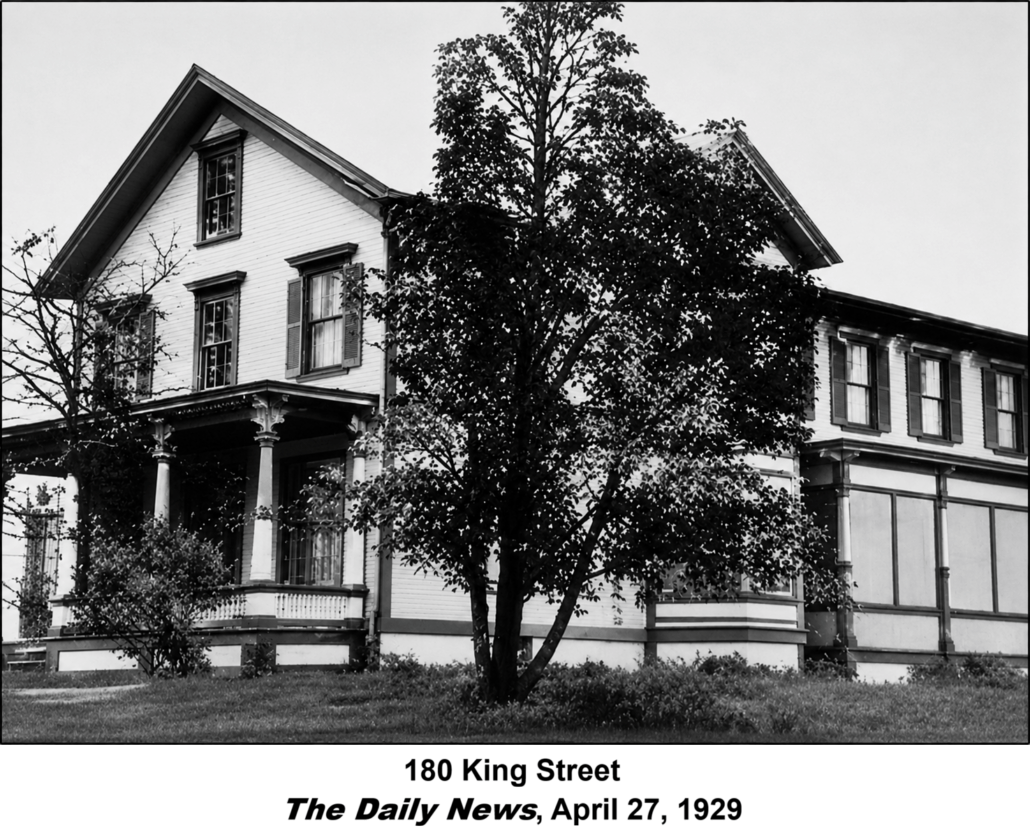
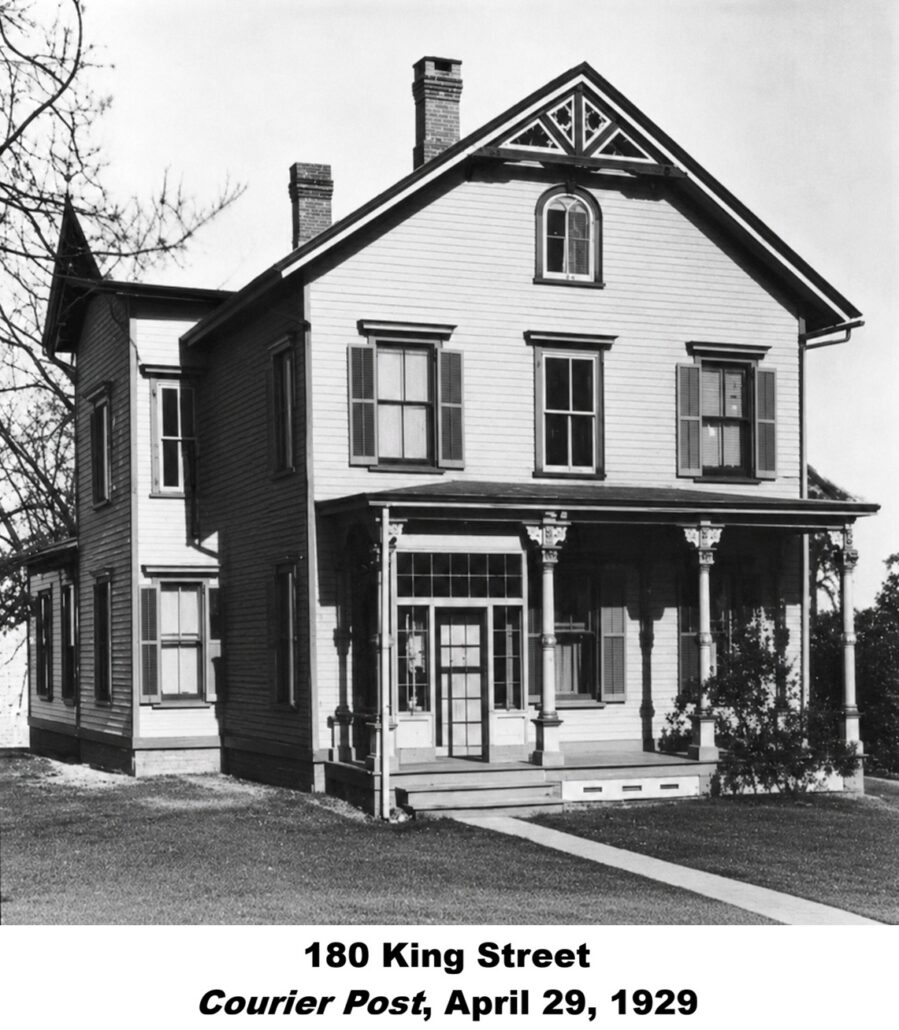
Living just a couple of doors south of Mrs. Winton was Samuel Beardslee, his wife Louisa, and his son Oliver, at 180 King Street. The current home at 180 King Street was built in 1920 as a 25-room mansion. However, the Beardslees had lived at this location long before the present house was built. The Samuel Beardslee family was descended from the original Beardslee settlers of Stratford with roots stretching back to the Mayflower. The family was religiously devout, very staunchly Democrat, and very wealthy. Interestingly, Mrs. Winton was an equally staunch Democrat.
Samuel Beardslee had served as Town Clerk, Town Postmaster, Probate Judge, Town Selectman, School Board member, and was very active in the town’s Democratic Party. Oliver had been a bookkeeper as a young man, was known as an excellent accountant, and was nominated for Town Treasurer in 1911. Like his father, Oliver was a staunch Democrat.
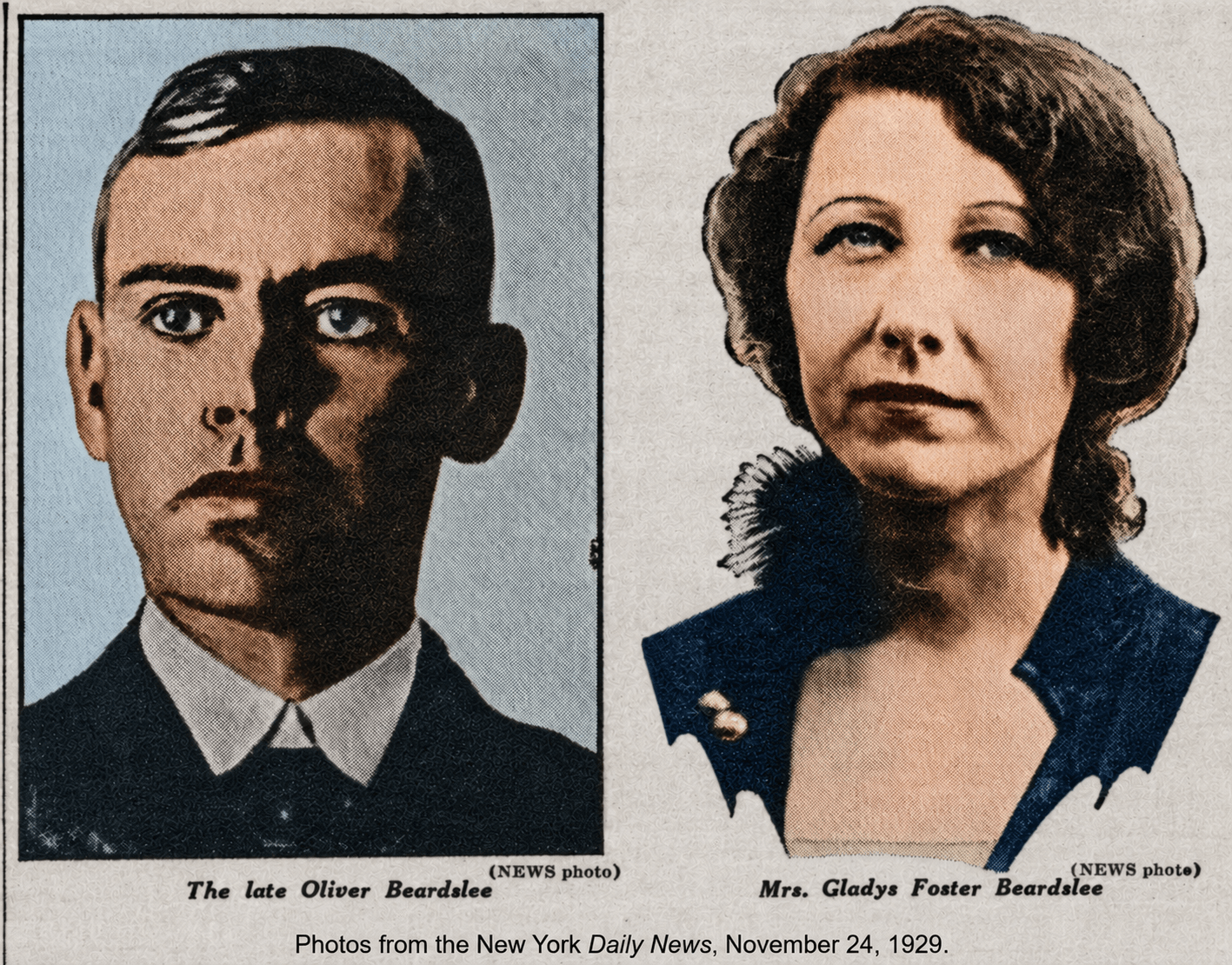
Oliver had enjoyed a privileged upbringing. His parents could provide him with all he needed, and he was one of the first residents in town to purchase a new automobile in 1911. His parents had guaranteed his future due to their abundant material and monetary resources. Oliver was an only child and was the sole heir of his parents “fortune.” When his mother passed in 1925, he inherited an estate worth over $100,000 (about $2,000,000 in 2026) in addition to the family home on King Street, and a “limousine”.
Somewhere along the line, Oliver gained the reputation of being the town’s “foremost women hater”. He publicly stated in 1919 that if the 19th Amendment to the Constitution ever became law, and women were allowed to vote, he would never vote again. As far as anyone knew, once the 19th Amendment was ratified, Oliver never did vote again. What a contrast! Mrs. Winton, a fellow Democrat, organizes the Stratford Equal Suffrage Association just a few doors north of Oliver’s home, and Oliver becomes the organization’s chief opponent.
After Oliver’s mother Louise died, September 1925, Oliver’s world took a bizarre, dark, and fatal turn. Without parental guidance, Oliver seems to have gone off, hell-bent for consuming his inheritance as quickly as possible on wine, women, and song. Shortly after his mother’s death, Oliver was introduced to Gladys Foster, a former telephone operator and waitress from Bristol, CT. He traveled with Gladys to New York, and other cities, to “see life for the first time”, and spend thousands of dollars doing so.
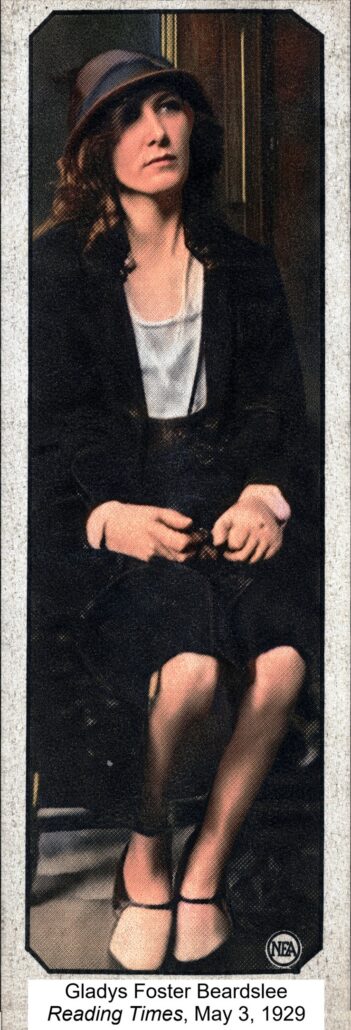
Gladys had been introduced to Oliver through an acquaintance Oliver had made in Bridgeport, George Williams, at a café owned by bootlegger Jim “Buffalo” Curcio. Gladys was a heavy drinker during these Prohibition Days, and Oliver obtained his liquor from Curcio. Prior to meeting Gladys, Oliver had proposed marriage to two other women whom he likely met through Curcio. Both women were bringing court actions against Oliver for breach of contract. Gladys, at various times, had had romantic entanglements with both Williams and Curcio.
Gladys was born in Bristol, CT in 1901. She eloped with Oliver to New York in August of 1926. The marriage stunned the residents of Stratford. They had known Oliver well, and knew how committed he had been to opposing women’s suffrage and women in general. Oliver and Gladys moved into his home on King Street after the marriage, and began having “some of the liveliest parties ever held in town.” The parties included an abundance of alcohol consumption. Gladys’ sister moved into the Beardslee home immediately following the marriage, and one of the frequent visitors to the home was none other than George Williams.
In October of 1926, two months after the wedding, Oliver filed for divorce accusing Gladys of intemperance and cruelty. Oliver moved, briefly, to Bridgeport, but the couple reconciled. Oliver revoked his divorce filing, and the two continued with their barely functional marriage at 180 King Street. Gladys stated that Oliver had promised her “everything”, but Oliver’s “everything” was rapidly diminishing.
Oliver was soon heavily mortgaged with liens placed on all his property. His limousine was repossessed. Gladys determined, once Oliver returned home, to put a damper on his wanton spending. She had Oliver’s cousin, John Wilcoxson, a well-respected Stratford man, appointed conservator over Oliver’s financial affairs.
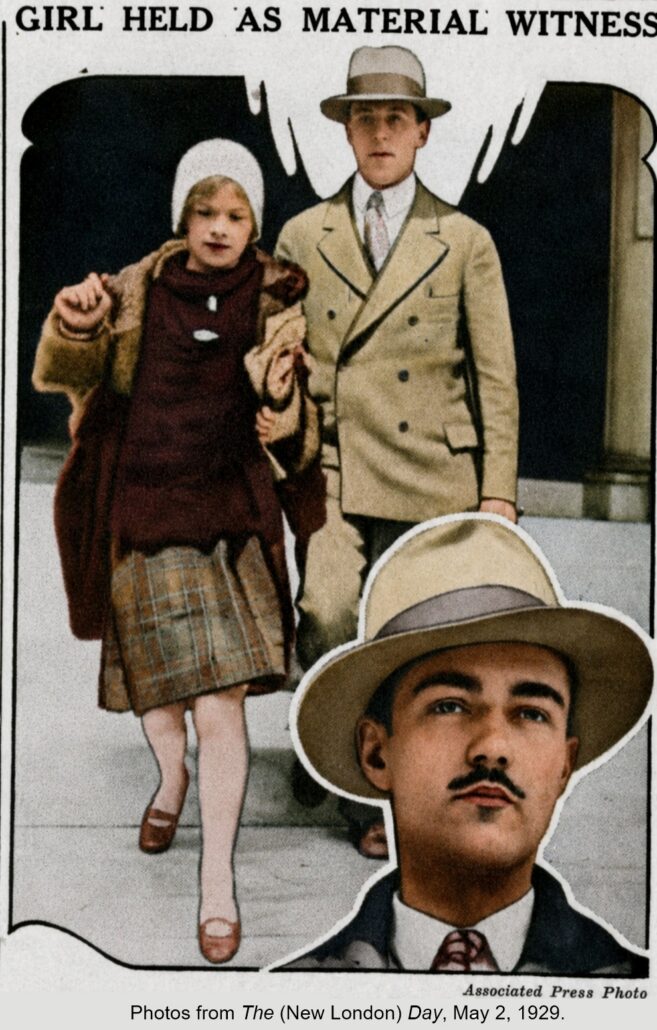
After a night of heavy drinking in Bridgeport on October 22, 1929, at Curcio’s cafe, Curcio offered to drive the couple back to Stratford. Upon arriving back at home in Stratford, Oliver accused Gladys of a romantic affair with Curcio. The accusation led to a fight where every type of household article was destroyed in a melee of anger in one of the rooms of the house.
On the morning of October 23rd, Gladys staggered up to Stratford police officer Robert Nairn in Stratford Center. She asked Nairn for change for a five-dollar bill and some coins to place a call at the Southern New England Telephone building on the corner of East Broadway and Main Street. “I want to call a doctor: my husband just shot himself,” Gladys intoned to Officer Nairn.
Stratford police drove to Beardslee’s home, where they found him lying on the floor with a gunshot wound to his head. He was taken to the hospital where Stratford Police Chief Flanagan swore he heard Oliver state that Gladys had shot him.
The story becomes a jumbled mess at this point. Police Chief Flanagan and an expert investigator stated there was no way Oliver shot himself because that would have left powder burns on his head, of which they found none. Gladys’ attorney, a man with whom she was having an affair, hired an expert witness who testified that the type of bullet shot from the .22 caliber Civil War era pistol would have left no powder burns on Oliver’s head, regardless of how close the gun may have been to Oliver’s head at the time the fatal missile was fired.
Gladys testified Oliver had been drinking heavily the night he shot himself. His autopsy did not support that testimony. Gladys stated she had been drinking heavily with Oliver at Curcio’s café. The two fought at home after Oliver’s accusation Gladys’ affair with Curcio. Gladys testifed Oliver took a gun, which she didn’t know he owned, into another room and shot himself in the head. Gladys maintained her innocence to the time of her death. She stated she remembered everything clearly even though she’d had much to drink.
Coroner Phelan stated in his professional review of the case that there was too much conflicting testimony and evidence to support a murder charge against Gladys, so he exonerated her.
Gladys was evicted from the Beardslee home in 1930 for the accumulated debt on the property. She moved to an apartment in Bridgeport, where she was found dead from gas asphyxiation on July 24, 1934. In the process of asphyxiating herself, she nearly killed two children living in the apartment next door. Notes surrounding her scantily clad body clutching an empty bottle of whiskey indicated she’d been having an affair with a prominent Bridgeport man who had “jilted” her for another woman.
You may draw whatever conclusions you will from this story. However, for us, in this month where we recall the ratification of the 19th Amendment to the Constitution in 1920, we can only draw one: opposition to women’s suffrage was a bad idea (at least for Oliver Beardslee). Perhaps Mrs. Winton’s suffrage association organizing meeting on King Street in 1912 created a haunting cloud looming over Oliver, who lived just steps away from the Wintons.


It appears the house is still standing, three houses south of the high school.