

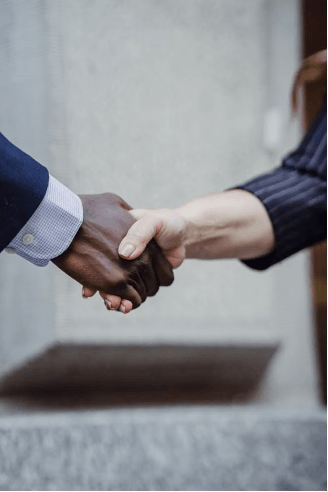
August is National Civility Month. One of the best, and simplest definitions of civility I’ve found states, “Civility is claiming and caring for one’s identity, needs, and beliefs without degrading someone else’s in the process.” This definition was created by Cassandra Dahnke and Tomas Spath, Founders, Institute for Civility. What this boils down to is respect for others so we may live in harmony and be good citizens.
Throughout the last two centuries more people have been demanding their rights, and governments have tried to codify rights in law. The U.N. adopted the historical Universal Declaration of Human Rights on December 10, 1948, which defines the rights and freedoms all humans deserve.
There has been a noticeable decline in civil behavior since the 1990’s, which started with controversial talk shows and reality television. Surveys and studies from universities and foundations have documented the erosion of civility. Advocacy groups like the Southern Poverty Law Center, the ACLU, and other civil rights groups have monitored the rise in anti-immigrant, anti-Semitic, anti-Muslim, and other extremist groups who target others based on negative stereotypes. When we objectify people, we strip them of their value and their humanity.
How can we help turn the tide of incivility so we can live as a civilized society again? We begin with ourselves. Ask yourself who you want to be in the eyes of others. Do you want to be remembered as a calm, capable, or compassionate parent, coworker, or commuter? Or do you want to be known as “that guy or that girl” who was rude to me in the store or cut me off in traffic? I realize that there are times we may need to speak up if someone has acted inappropriately or crossed social or physical boundaries, but we must respond in a way that informs and teaches rather than simply rebukes or humiliates the offender.
Unfortunately, many people do nothing when they experience incivility, are hurt or are discriminated against. Often people witness harassment, aggression or intimidation at home, school, the workplace and they are afraid to speak out against bad behavior because of reprisal or retaliation. Someone might take a video of the encounter with their phone or there might be security camera footage that shows what transpired, but our society has become used to being bystanders who don’t want to get involved. We need to change this by showing care for each other. We need to put ourselves in the other person’s place and find a way to help that is genuine and reflects our values.
When someone has done something that triggers a reaction, we need to pause for at least one beat and ask ourselves why the person did what they did or what they meant by their words. That pause gives a moment for us to determine whether the other person meant harm and if we have the energy to respond to the offense. People are often oblivious of their actions until their impact is pointed out. I have been on both sides of this issue and if I have hurt someone – even unintentionally – I apologize. I don’t want to harm anyone and hope to leave the people I meet with a good impression. I want people to feel encouraged or uplifted by my presence, even if I must make a complaint or assert myself.
If we cannot handle disagreements ourselves, we may have to elevate the problem to the appropriate authority or law enforcement. That is why it is important to have honest discussions about problems or infractions, not alarmist overreactions which prompt further aggression and could escalate into violence. To have a productive discussion, we must have confidence in the people we are speaking with. That means we must trust that the person will listen to us and take our concerns seriously. When we acknowledge the differences in belief and opinions, this helps us engage more constructively. We are clear about what is acceptable behavior and what is not. This makes for a safer environment and can reduce conflicts.
Last week, many news outlets reported on Luigi Mangione. He was the young man who shot insurance executive, Brian Thompson, due to his dissatisfaction with an insurance company not addressing his chronic pain from a back surgery. He claimed that insurance companies don’t care about patients and expressed his displeasure on social media. Many people viewed him as a hero for shooting the executive who, in their view, represented insurance companies who often deny claims for injured people and only care for their own profitability. U.S. Attorney Jamie McDonald said Mangione “admitted to stalking and murdering Brian Thompson on a Manhattan street in broad daylight” and that “no grievance, political belief, or ideological cause can justify murder.” The prosecutor also said …”we live in a civilized society governed by the rule of law. We debate, we disagree, we protest. We do not commit murder. No grievance, political belief or ideological cause can justify murder.”
Our country has rules and laws for a reason. They are meant to create legal guardrails and set expectations. If there is a problem or infraction, address it in legitimate ways. It is important that we find constructive ways to express our views without resorting to aggression. It does not matter if you disagree with the outcome of an election or the views of an activist, violence creates more violence and overrides any hope for discussion.
Our second US President, John Adams felt strongly about the subject. A condensation of his beliefs has been stated as:”The true greatness of a nation lies not in its wealth or power, but in the civility of its people.” Life is hard enough without us creating dubious conflicts and trying to undermine each other to survive or get ahead. Let us remember that we are all trying to make a living. When we see what we have in common, it is easier to feel a sense of belonging and camaraderie. If we truly want to “Make America great again,” let us return to the values of kindness and civility again.

